The tactile sublime
written for Don Bryan Bunag’s Being
by Raymond de Borja
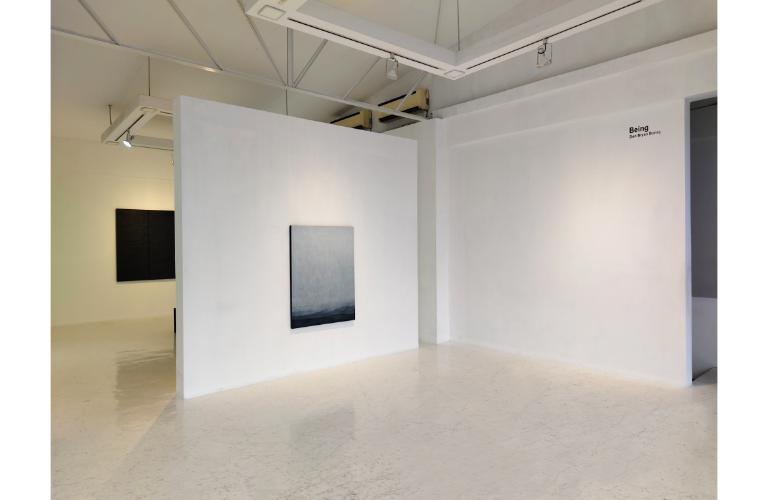
At a moment when much of contemporary art is absorbed in questions of its cultural legibility and its critical positioning, Don Bryan Bunag’s Being risks a return to the sublime. At a cursory viewing, Being appears to restage familiar conventions of the sublime with its choice of scale and subject matter – wide, unpeopled landscapes, ocean, sheer darkness, celestial phenomena, astronomical sky,… – as if it were nostalgic for archaic uncertainties and the exhausted ideals of universalism and Enlightenment thought. Yet the being in Bunag’s Being is as much the capital-B of Western ontology as it is its commonplace iteration, the verb to be in the continuous present, ordinary and unfolding; and the sublime, as a form of limit-experience, is captured in both its Kantian immensity (as that which exceeds the imagination) and its intimacy as a Lacanian Real (as that which resists language).
These conceptual overlaps gain particular force when considered alongside how aspects of the sublime permeate contemporary experience. No longer confined to the aesthetic distance of Burkean awe + terror, the contemporary sublime – in the form of algorithmic governance, mass datafication, ecological collapse, and unceasing war – does not overwhelm at an aesthetic or theological remove, but operates with unsettling intimacy and saturation, embedded in the very infrastructure of everyday life.
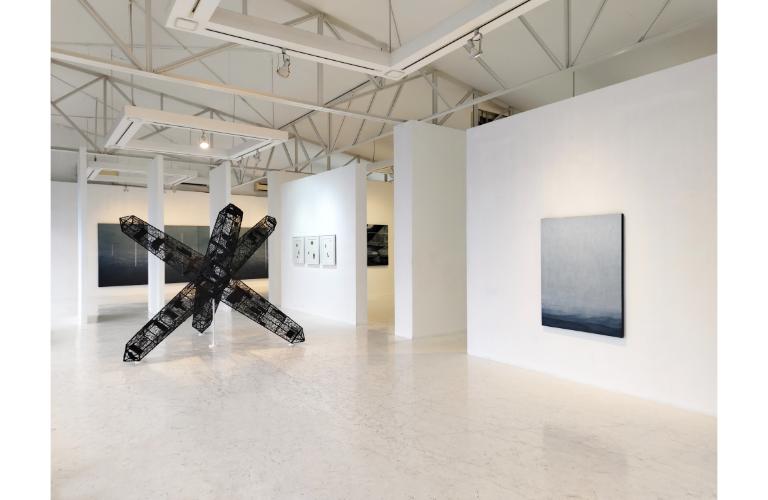
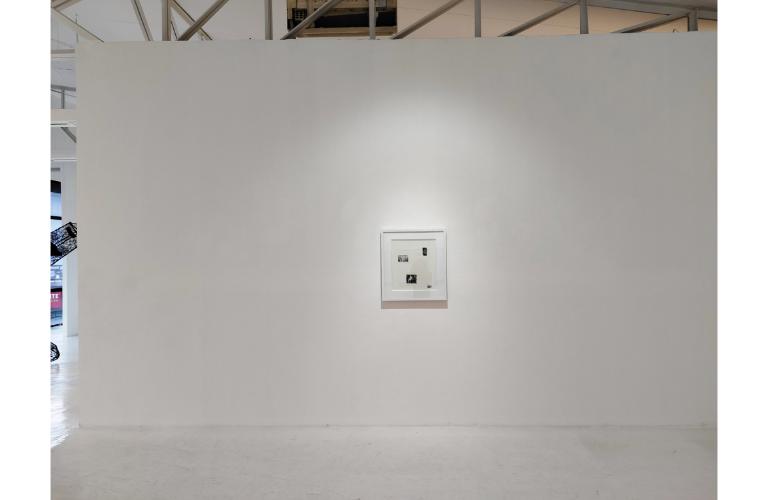
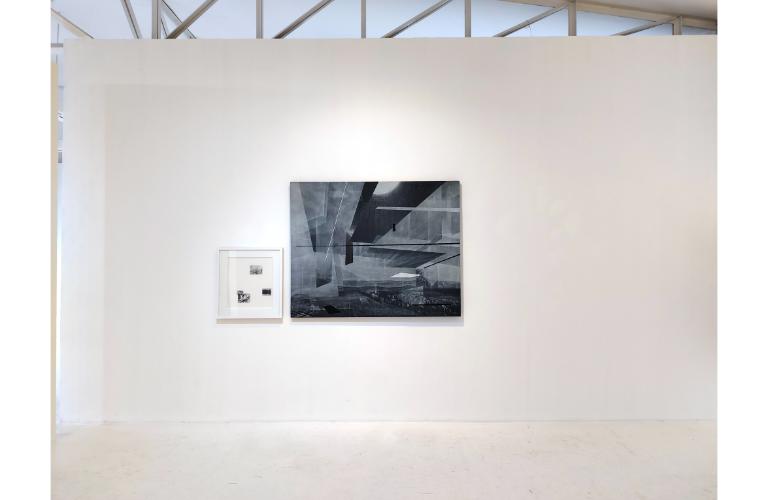
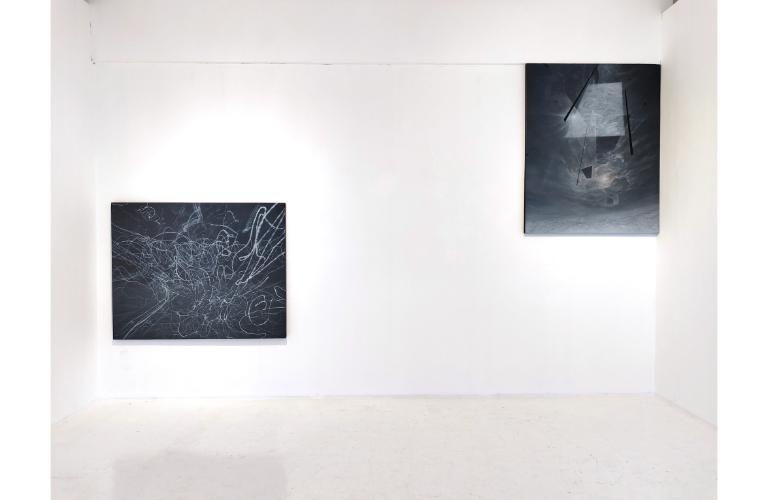
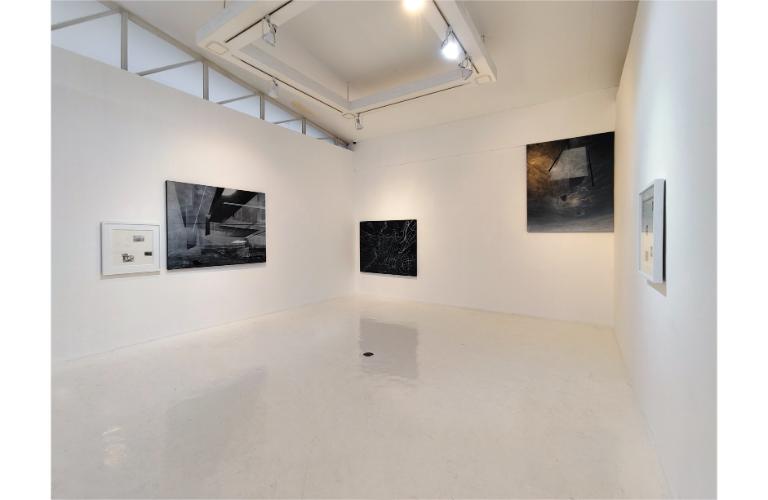
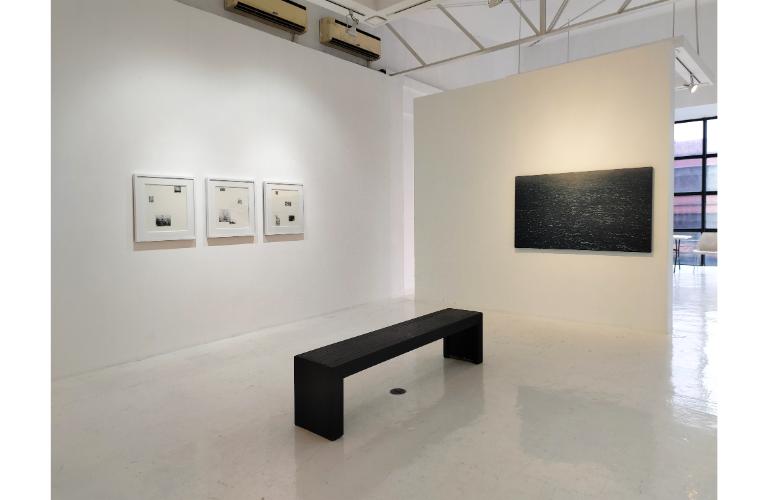
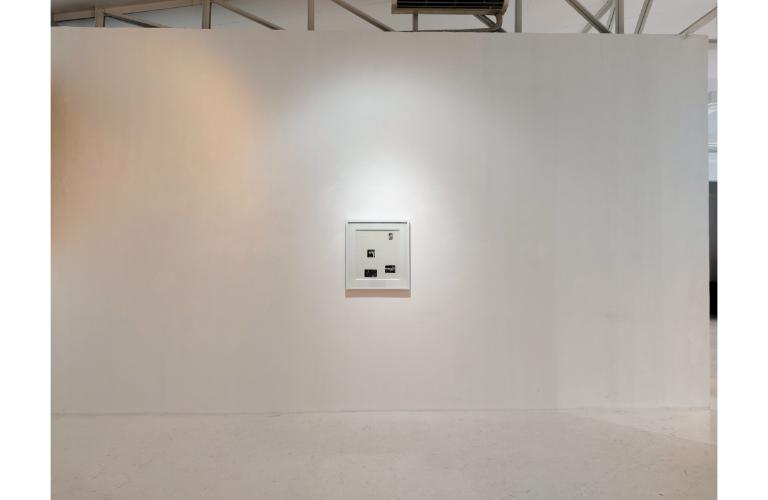
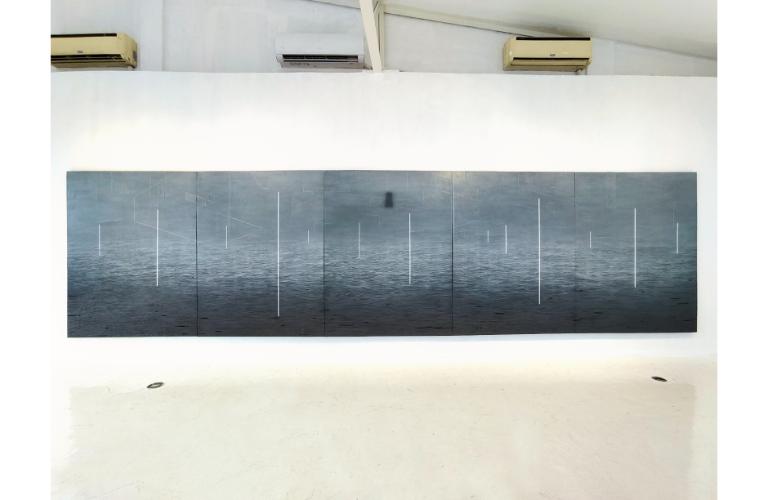
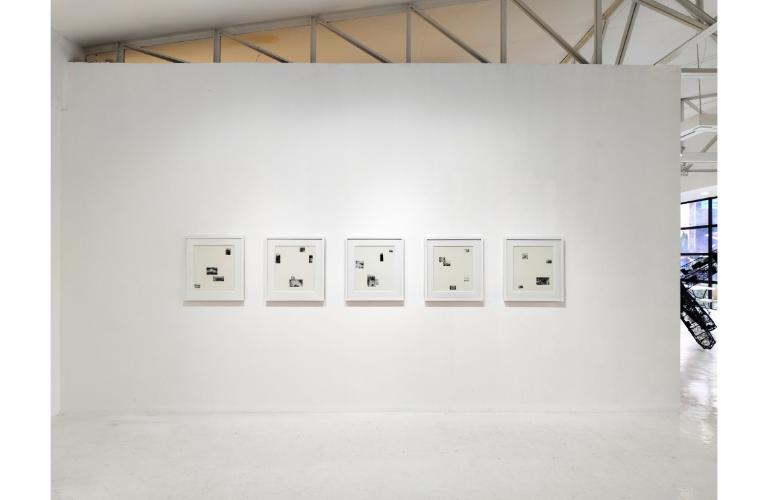
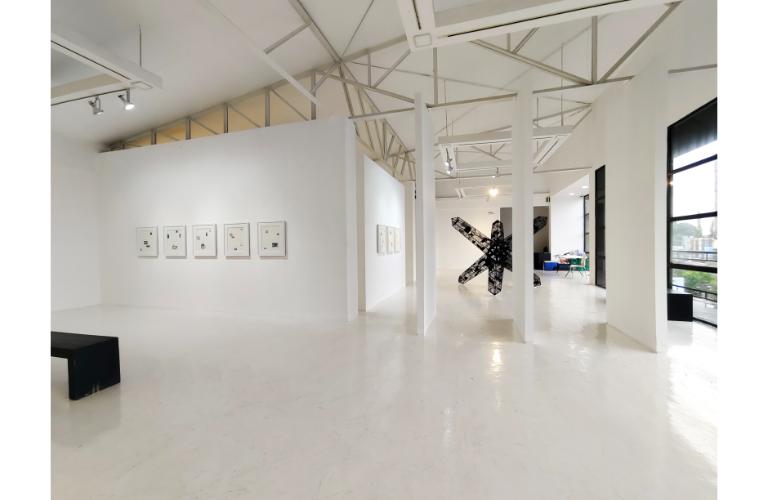
Bunag renders this flickering, from immense to intimate, from capital-B to verb to be, through a deft composition of medium, scale, and material. The works range from a large polyptych painting measuring 6.5 by 20 ft to a series of fifteen small-scale pieces, each at 18 by 16 in, titled “Microcosm”, interspersed among the larger paintings, each structured by generous fields of negative space and a collage of minimal, swatch-like samples. Across these forms, he builds his tenebrous surfaces through the layered application of Musou Black, a paint engineered to absorb 99.4 percent of visible light. Yet this extreme light-absorptive quality is deliberately compromised in Bunag’s compositional process, as cotton fabric and thread – tenuous, commonplace materials – are stitched or adhered to the canvas, interrupting the visual seamlessness with texture, drawing the surfaces back into their material visibility.
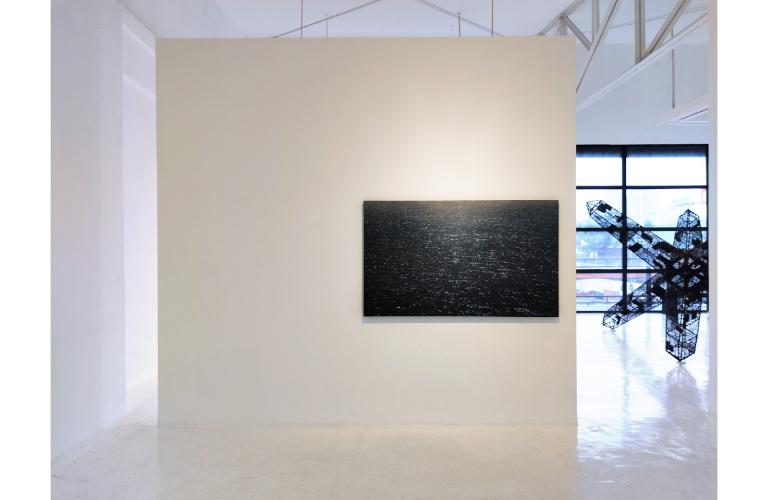
This interplay of material, visibility, being, and appearance is palpably realized in “Great Divide,” where a diptych-like effect is created within a single, monochromatic 5-by-4-foot painting.
Composed of heavy layers of acrylic black paint, “Great Divide” is bisected by a vertical line of Musou Black that assertively splits and organizes the composition. Under shifting light conditions – and because the paint’s light-absorptive quality is attenuated when thickly and unevenly layered on canvas – a sea-like form flickers into view as either the lighting or the viewer’s position changes. In this way, materiality mediates painting’s representational effect: the illusion of depth and pelagic expanse arises through the canvas’s material support, while simultaneously revealing the support’s actual nature as textile.
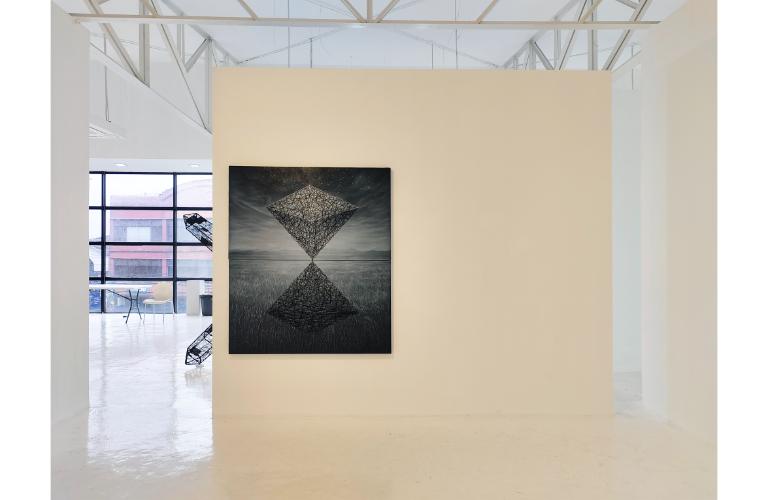
The gap becomes an active compositional and conceptual element in “In Between the Self and the Body,” a diptych that stages two distinct but visually contiguous scenes: the upper panel renders a mountainous range under a vast sky, while the lower panel presents an empty, grass- covered landscape. At the center of each is a pyramid-like structure – one mirrored against the other – recalling the logic of Lacan’s mirror stage, in which the subject comes into being through the misrecognition of their unified image. This troubled recognition is foregrounded through the pyramids, which mirror each other in structure but are covered in threadwork whose weave, while formally analogous, is distinctly and arbitrarily detailed, undermining the presumed correspondence of the specular image. The minimal physical space that separates the panels becomes at once an actual gap and an active compositional element, the ‘in between’ of the work’s title, a middle space that doubles as a painterly black line, functioning as both cleaving edge and generative zone of suspension where the sublime, as ungovernable excess, is the rupture between body and image.
Cosmic and contemporary registers of the sublime converge in “13 Billion Questions and Counting” and “Endless Whispers.” The number thirteen billion which evokes the temporal vastness of cosmological time and references the approximate age of the universe, when combined with “questions,” might very well be a gesture too towards the scale of human inquiry in the age of large language models, suggesting the immense volume of prompts that circulate through these probabilistic, transformer systems at a given cumulative moment.
Patches of fabric and threadwork, gauzy and woven, strewn and stitched across the 6.5-by-20- foot surface of “13 Billion Questions,” resemble both speckles of cosmic matter and the inchoate synaptic forms one might imagine congealing in a neural network. In “Endless Whispers,” squiggly, spectral lines seem to issue from a void toward the viewer. These entangled lines conjure the theological resonance of the logos in creation myths and the ceaseless whisper of data streams in computational and surveilled daily life. Across both works, the sublime is spectacular and ambient, cosmic and computational.
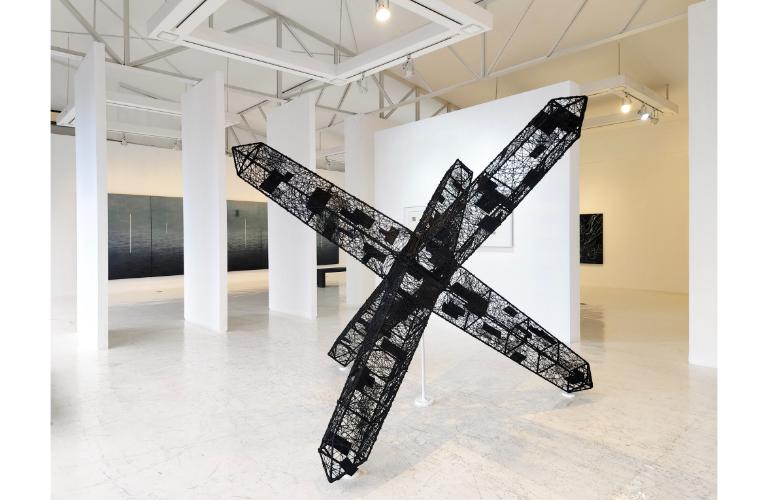
The most imposing work in Being greets the viewer at the entrance: “Standoff,” a sculptural installation whose scale and geometry draw from the anti-tank hedgehog, a wartime structure designed to impede the movement of armored vehicles. But here, the object’s military function is softened. Assembled from steel frames, covered in fabric and thread, and coated in black industrial paint, the structure’s utility becomes performative, conveying the affect and mimicking the logic of military defense, while simultaneously reducing the structure to an inert form. This softened geometry enacts the afterlife of war objects – relics that have outlived their combat utility and now settle into the civilian landscape as hollow forms: ghostly reminders of violence, some still retaining their residual dangers. In the ongoing reality of proxy wars and permanent states of emergency, what becomes of the sublime as an anxious residue of failed attempts at mastery? Unlike the I- or L-shaped steel beams typical of anti-tank hedgehogs, “Standoff” is composed of fused obelisk-like structures. In Egyptian cosmology, the obelisk is a fragment of the sun, the earthly embodiment of its rays. In the painting titled “Sun,” the veiled, tenebrous sea of “Great Divide” is brought in sharp, photorealistic clarity; the sublime effect of pelagic expanse further achieved in the absence of a shoreline from which the viewer might
safely contemplate the sea. The sun in Bunag’s “Sun” appears only as the radiant glimmers caught on the sea’s surface. Not a radiant circle, but perhaps Celan’s threadsun: “Threadsuns/ above the greyblack wastes.”* Filamentous. Ductile. Centers, recalling Yeats, which cannot hold. Where Kant positioned reason as the human faculty that reasserts control over the sublime, Jean-Luc Nancy decentered the human and reframed the sublime as ontological exposure: being is always being-with, a condition of finitude without mastery. In Bunag’s painterly line and constructed horizons: the middle space of shared limit-experiences. Celan: “there are / still songs to sing beyond / mankind.”
Works
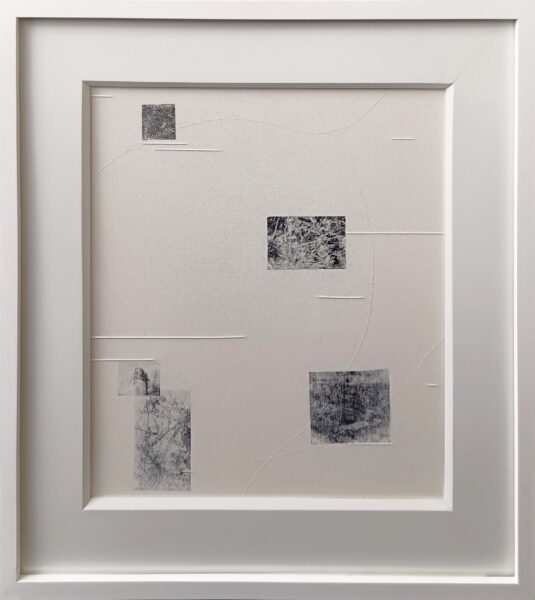
Microcosm 1
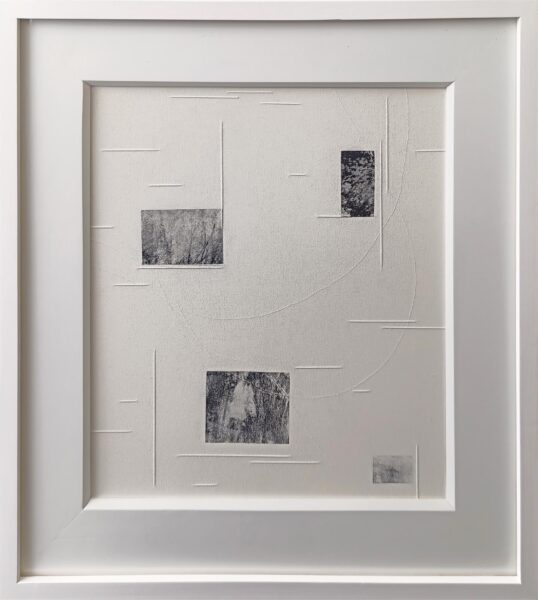
Microcosm 2
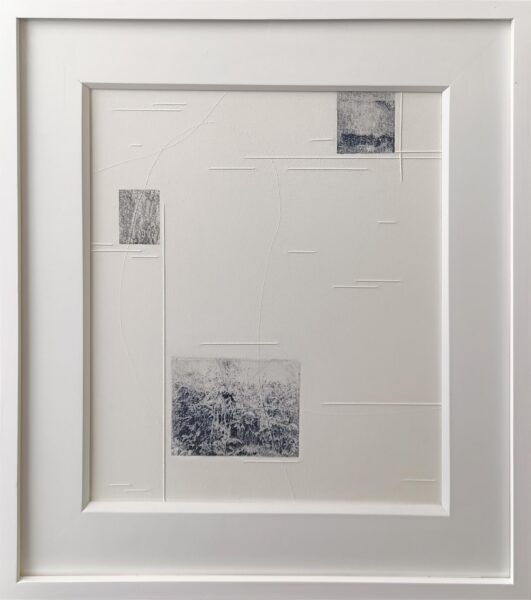
Microcosm 3
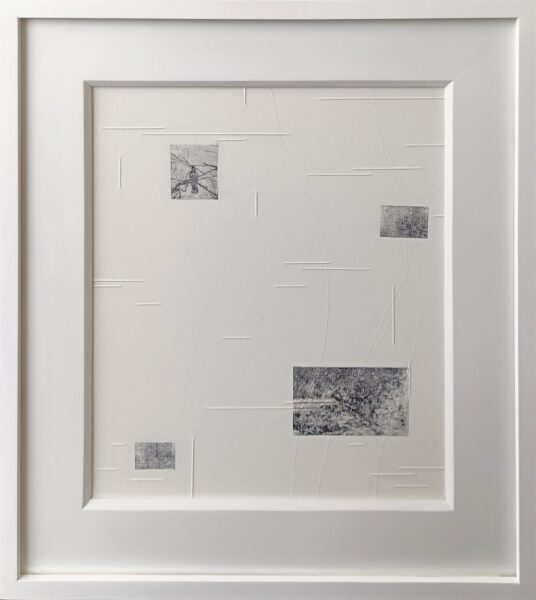
Microcosm 4
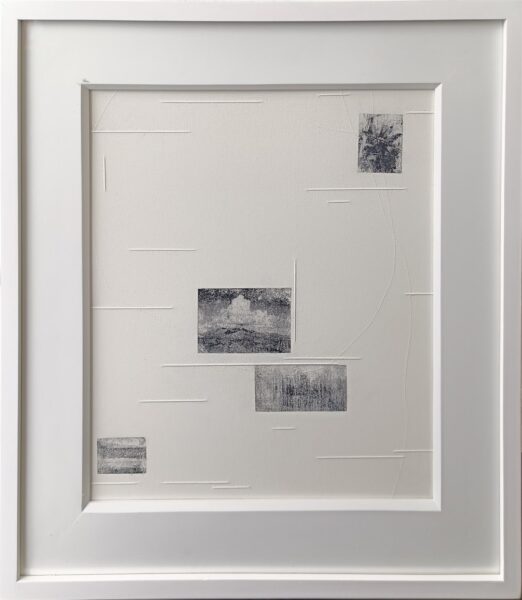
Microcosm 5
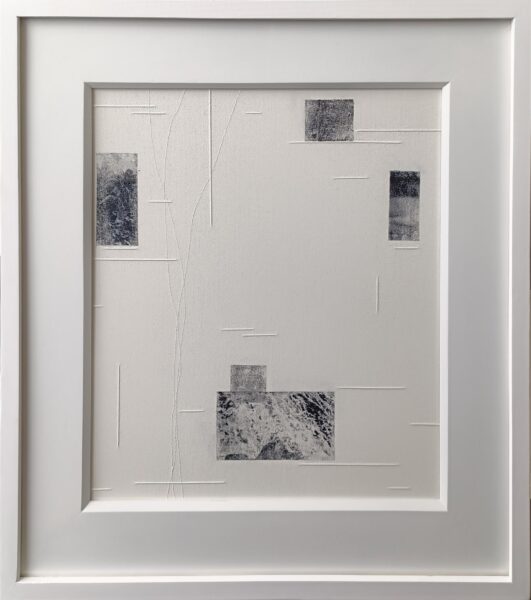
Microcosm 6
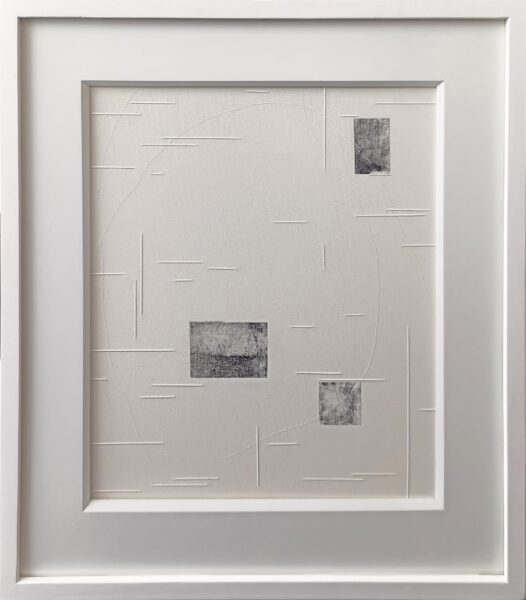
Microcosm 7
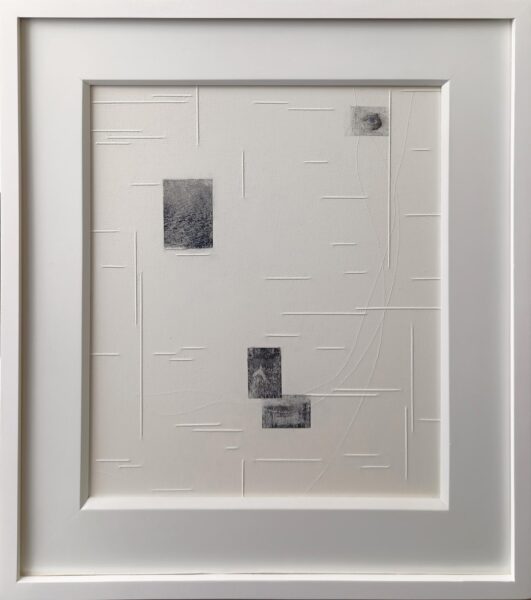
Microcosm 8
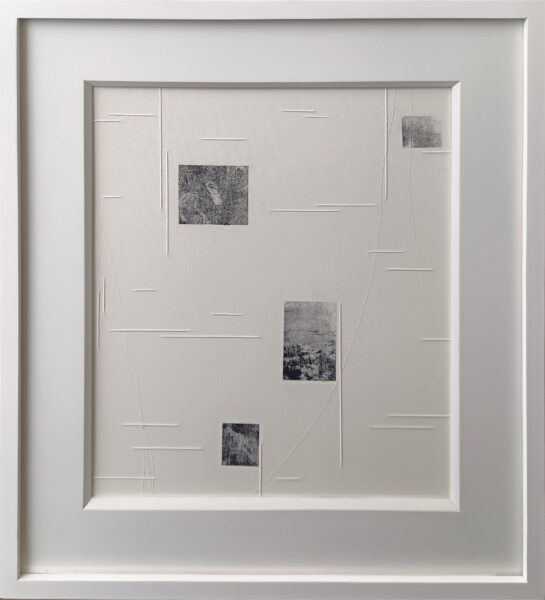
Microcosm 9
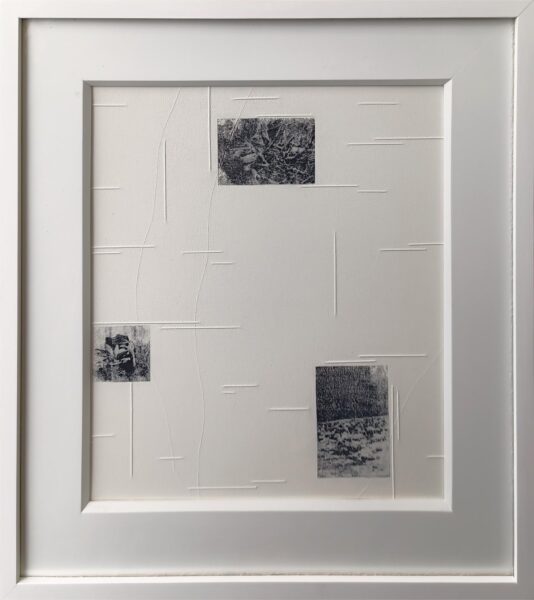
Microcosm 10
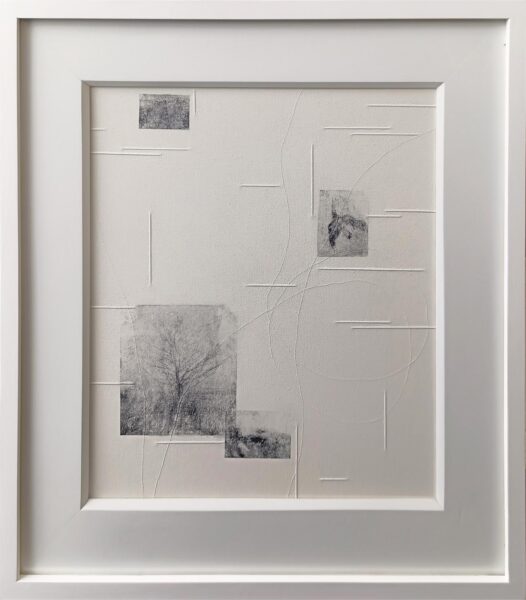
Microcosm 11
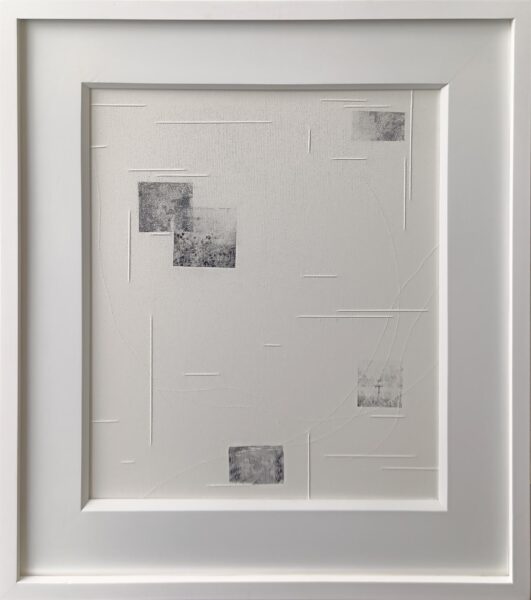
Microcosm 12
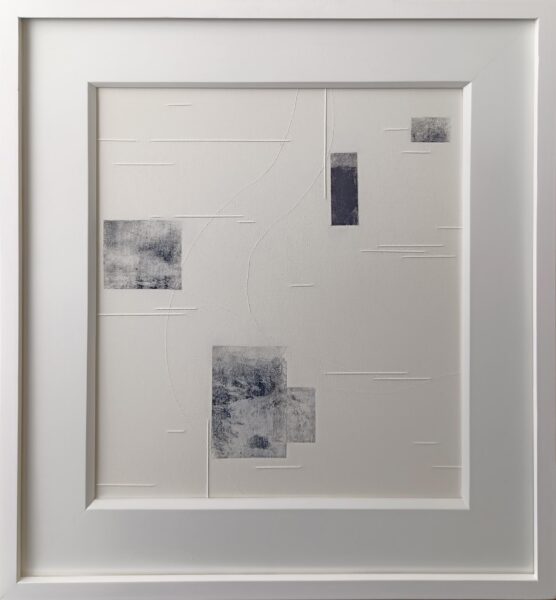
Microcosm 13
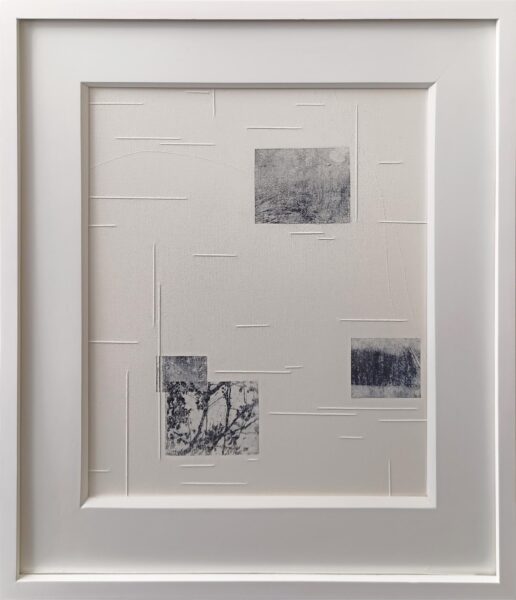
Microcosm 14
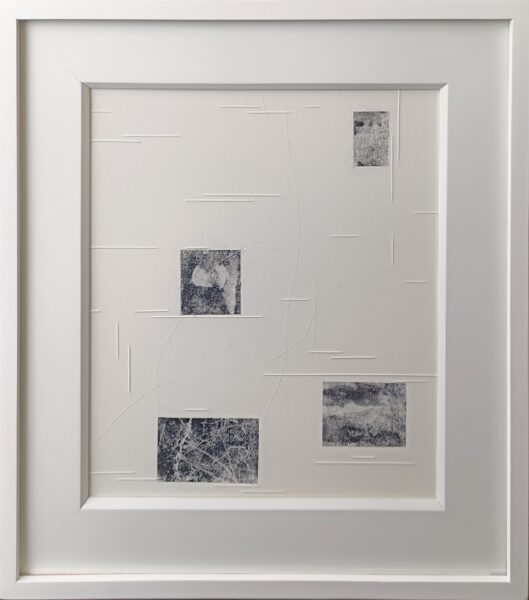
Microcosm 15
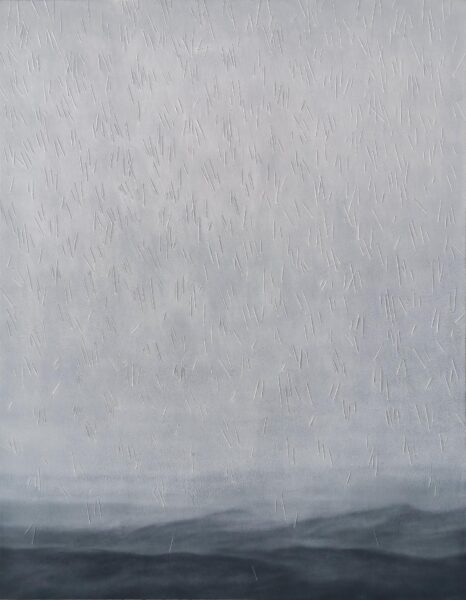
Weight of Emptiness
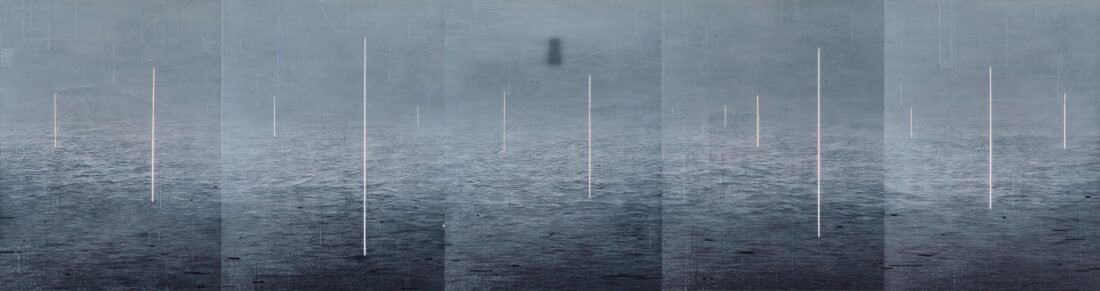
Thirteen Billion Questions and Counting
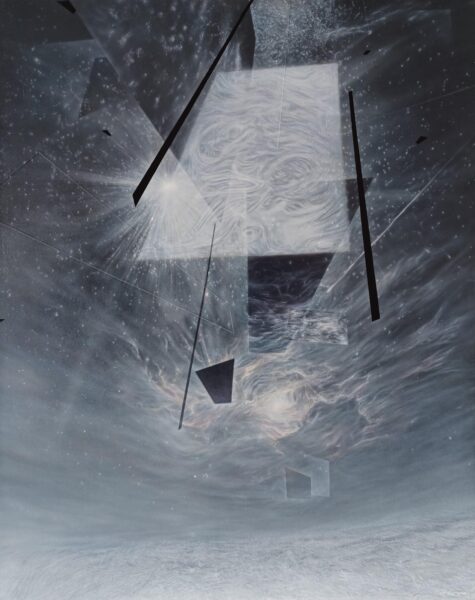
Speck of Dust
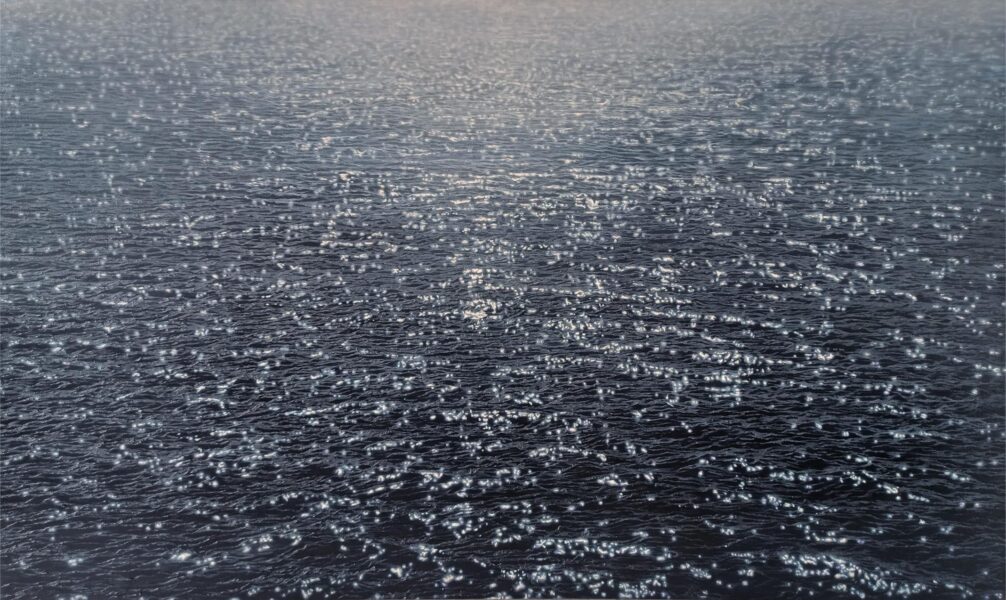
Suns
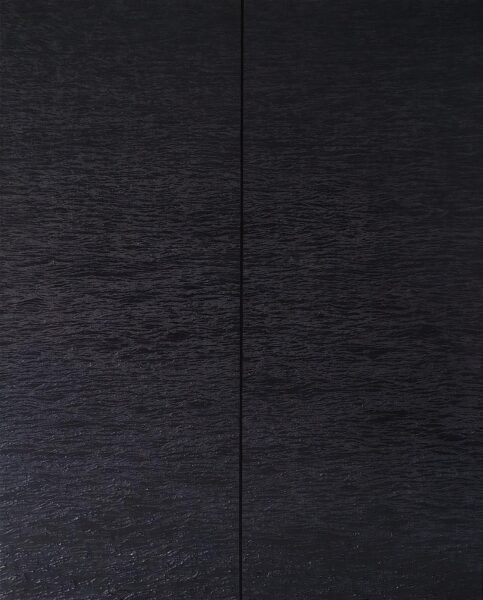
Great Divide
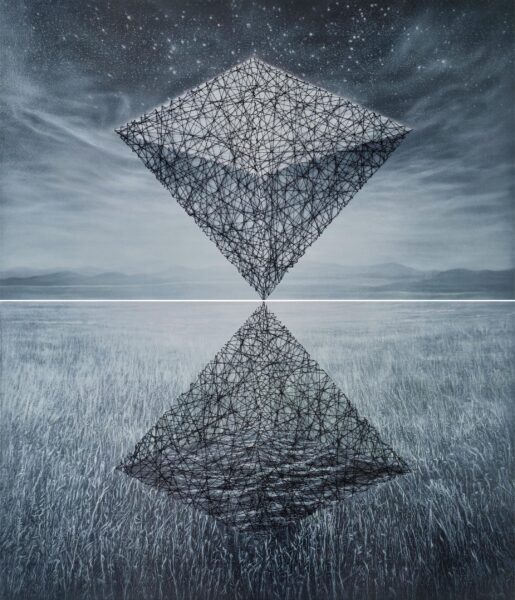
In Between The Self and the Body
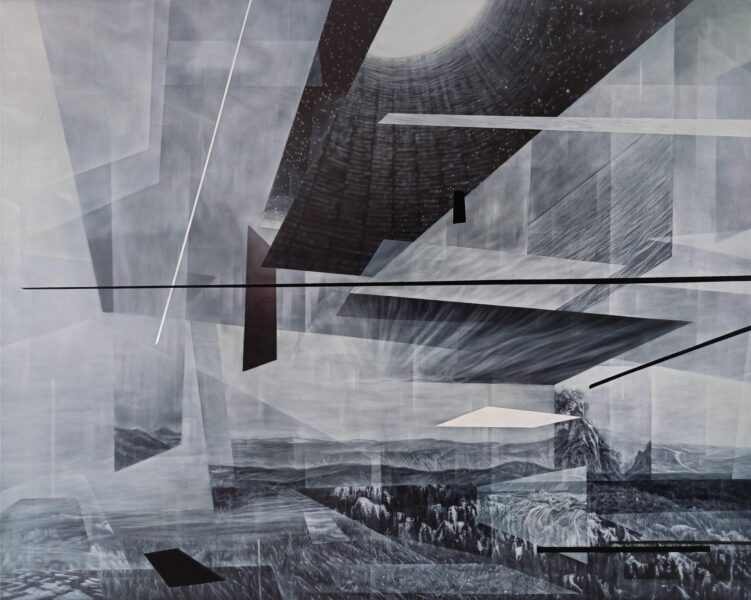
Absence of Meaning
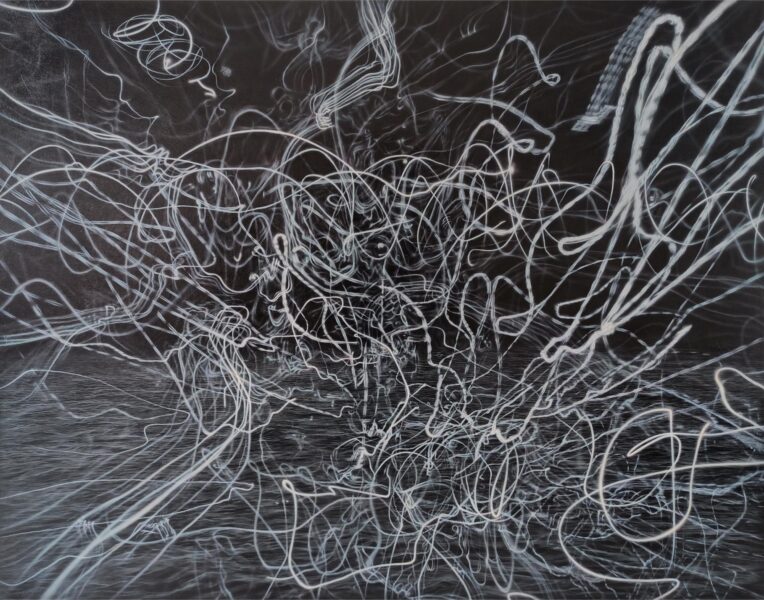
Endless Whispers
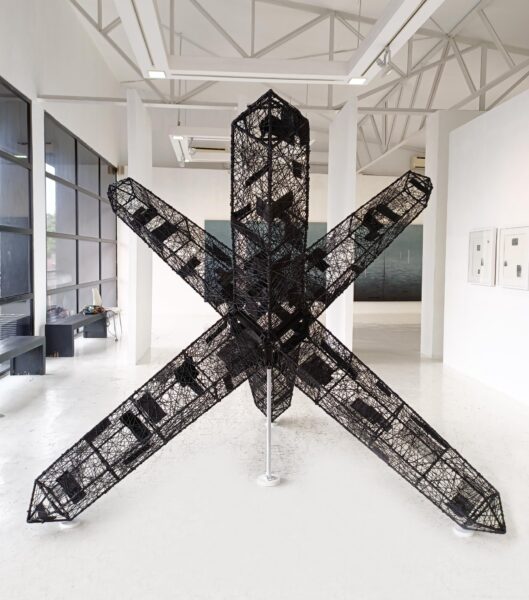
Standoff
Documentation