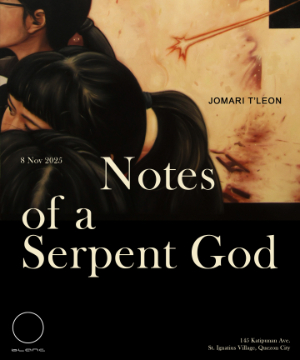
Notes of a Serpent God
Jomari T’leon
What remains when the act never ends? What is revealed when we step into the light without armor?
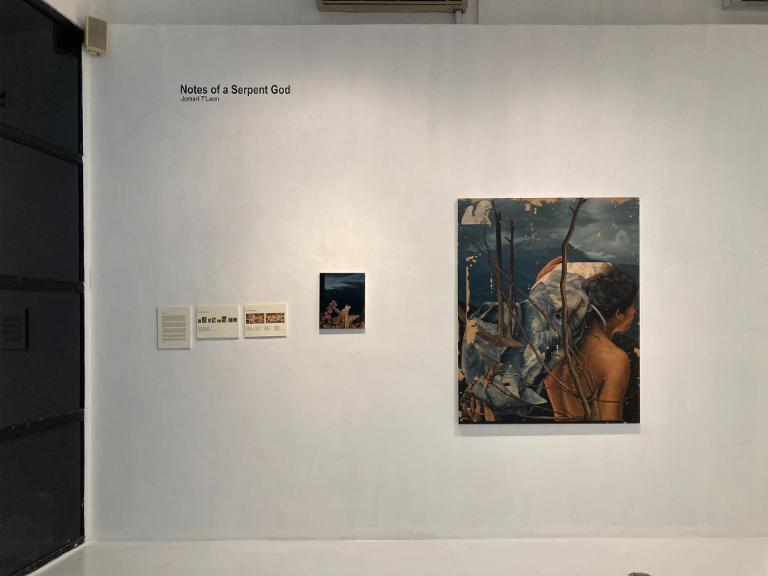
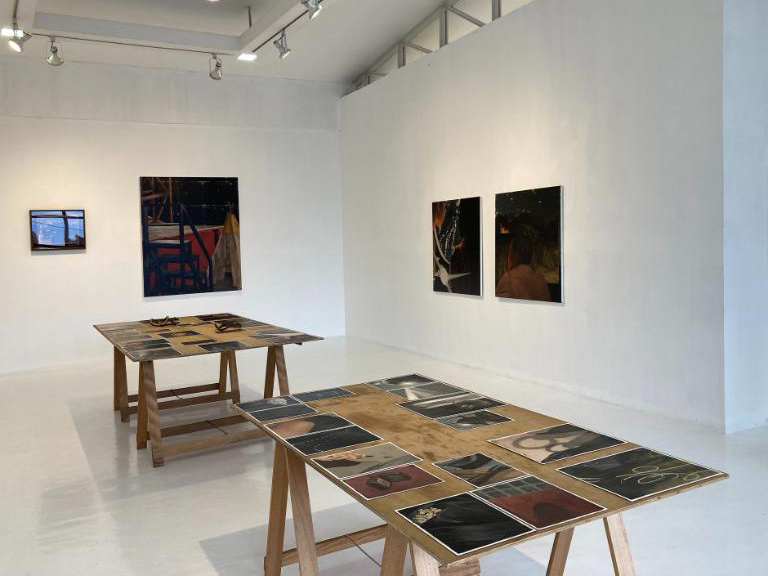
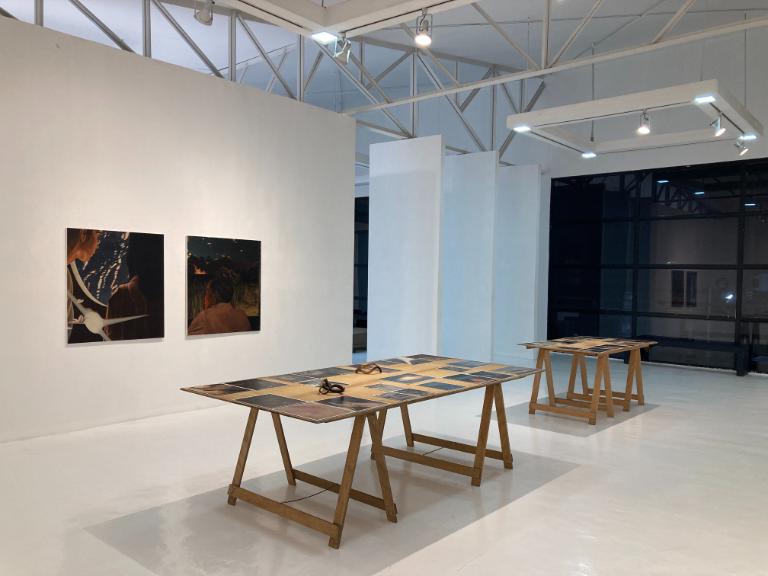
In Notes of a Serpent God, Jomari T’leon wanders the in-between—a liminal space where thought has not yet arrived, and meaning shifts like a tide-shaped shoreline. Direction comes to a halt. Heart leads before the mind concludes; intuition lights the path when reason lags. The exhibition dwells in uncertainty yet does not offer empty resolutions, treating inner conflict and vulnerability as material, recognizing transition as an entry point where meaning develops. Life in this space is fragile yet profound, tracing a quiet journey of becoming. This process unfolds with courage and tenderness, moving authentically beyond struggle. Here, instinct precedes reason, with pieces in the exhibition set in varying states of uncertainty. Inner conflict and precarity feel almost tangible. Becoming is observed quietly. It’s not a struggle, rather, a gentle move toward honesty.
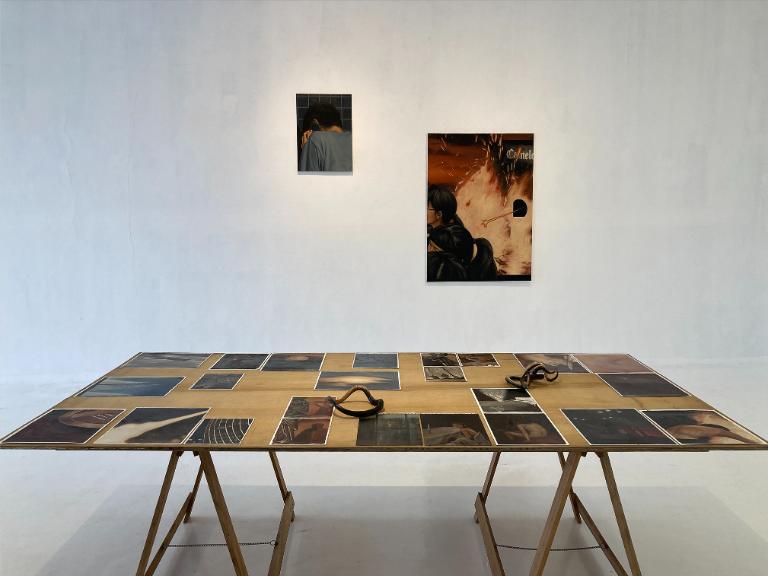
Thoughts form and shift as they emerge, given life and meaning, illustrating the quiet persistence of growth under observation. In Embers from the Burning Wings of Icarus, a bright streak cuts through the sky. Below, two figures watch what descends, its brief glow reminding them of a shooting star, not a sign of disaster. This moment exists between spectacle and detachment, like fireworks: what can be troubling in reality can look beautiful from afar—its light show fascinating eye candy, but emotionally devastating. Within Family Tree II, a solitary figure carries broken branches. These symbolize fragments of family, memory, and responsibility. Endurance is treated gently with no theatrics like Sisyphus; it simply reflects the human experience.
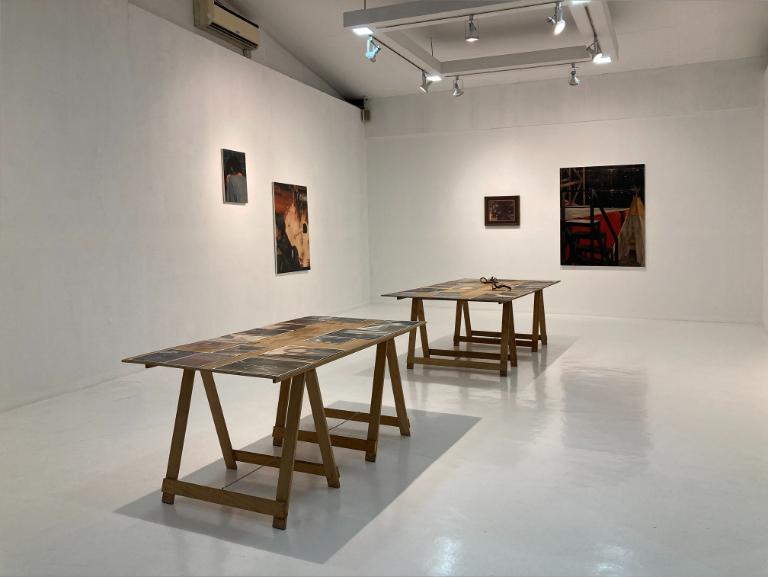
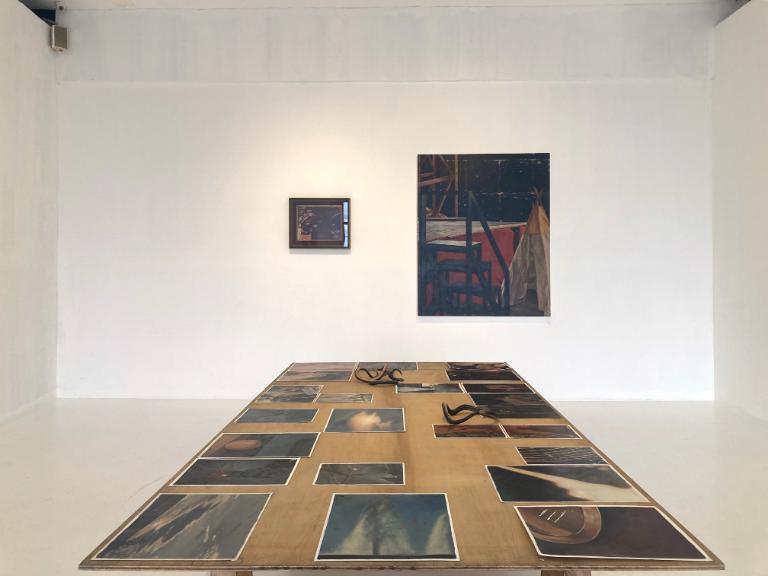
In Platform, shifting roles depend on where one stands: as a stage, it highlights performance; as a pedestal, it holds something up for scrutiny; as a threshold, it marks a passage into new experience. This shifting meaning prompts reflection on stepping forward, becoming visible, and facing judgment. Stillness becomes a pause before action, and being present takes real courage. Culdesac, however, offers a view of light moving over another figure, then fades into the haze of memory. Moments pass as quickly as a camera flash, briefly illuminating before vanishing. Reflection lingers until the path curves into a dead end, underscoring that progress rarely goes linear and that what we try to leave behind can always come back to us.
Works on paper carry a lighter, more immediate sensibility. Drawn from personal photographic archives, each piece is a vignette, capturing a fleeting moment–no need for grandeur or for monumental significance. Simply noticing the ordinary is enough. As Susan Sontag writes in On Photography: “All photographs are memento mori. To take a photograph is to participate in another person’s (or thing’s) mortality, vulnerability, mutability.” So in this exhibition, frailty is revealed without full disclosure.
The invitation is clear: observe closely. Approach and discover quiet strength through attentive scrutiny. With no solid ground, certainty, or guaranteed answers, Notes of a Serpent God lives in the constantly shifting space between changes, depending on whoever perceives–restless, open, and full of possibility. T’Leon’s works do not look for closure, staying in the quiet confidence of transformation, gently becoming but never complete.
-A. Labyrinth
Works
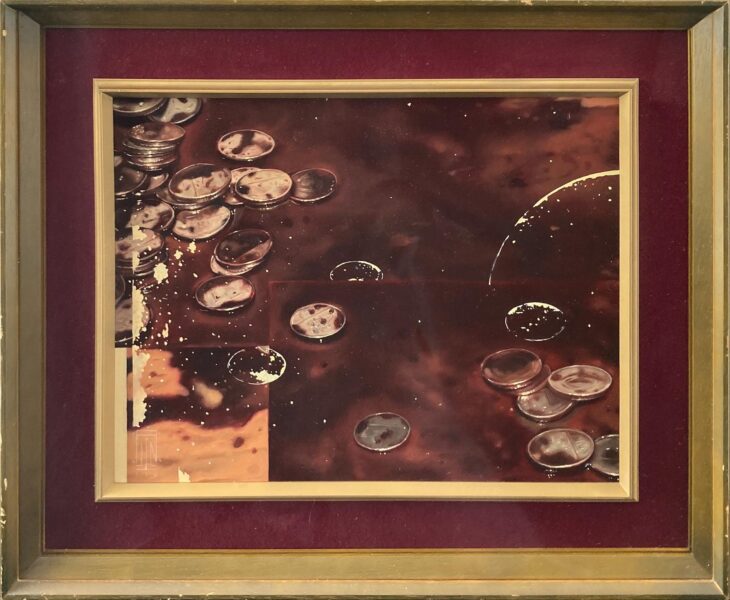
Cursed
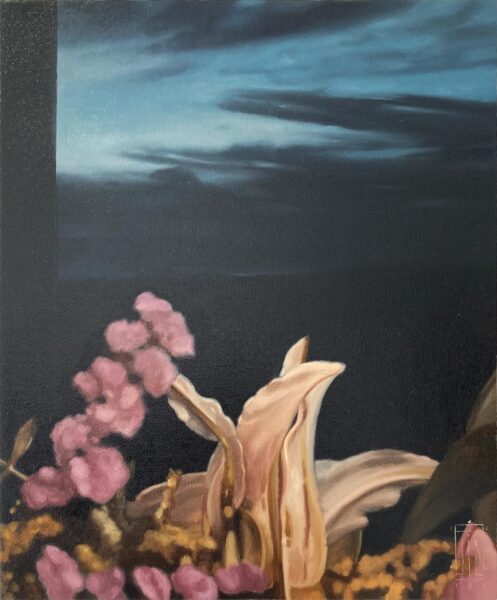
New Vice
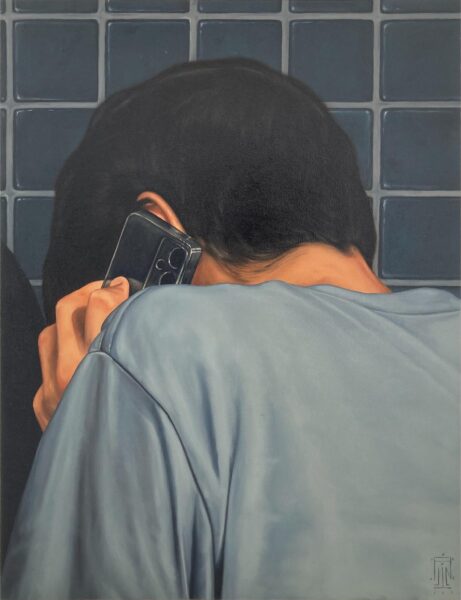
Ghost
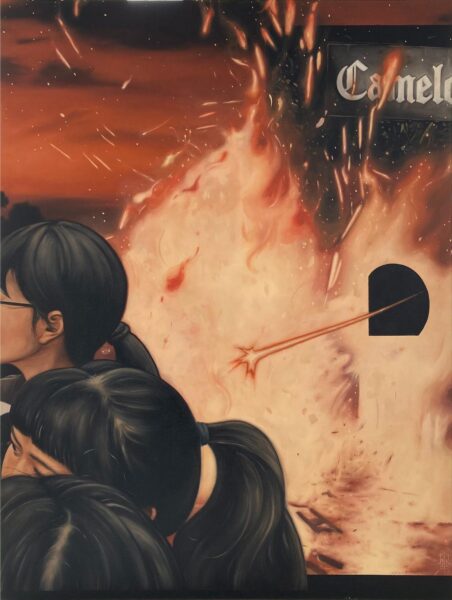
Culdesac
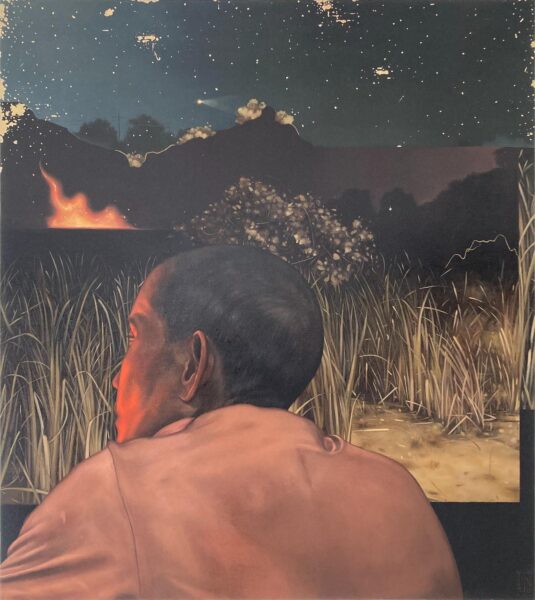
One Last Look
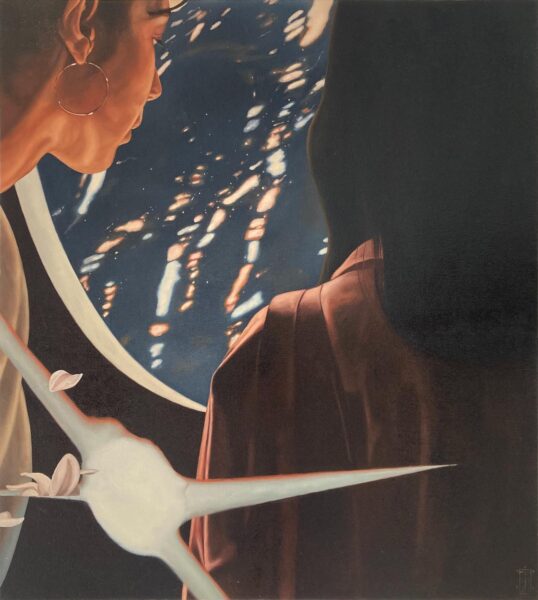
Embers from the Burning Wings of Icarus
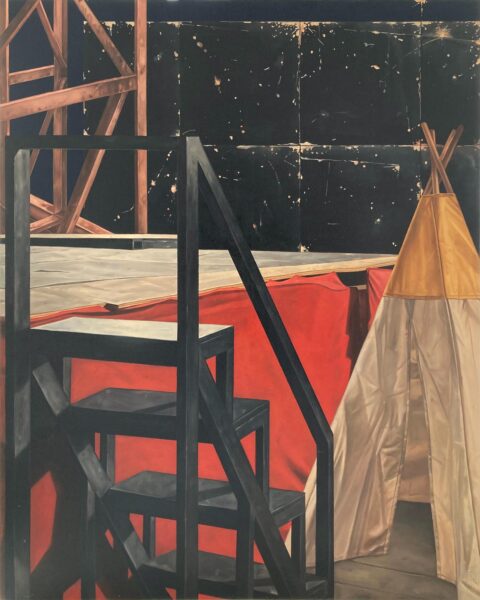
Platform
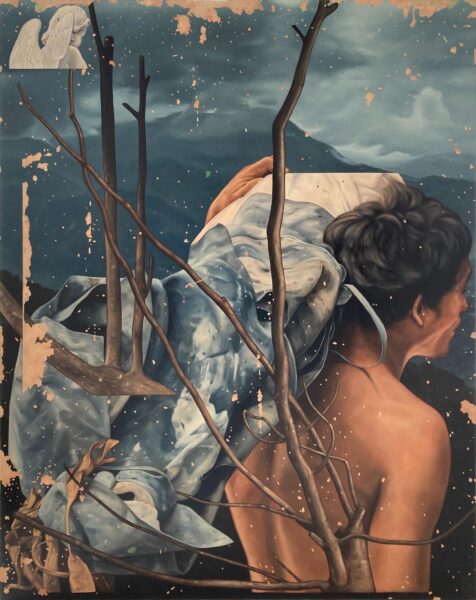
Family Tree II
Documentation