–
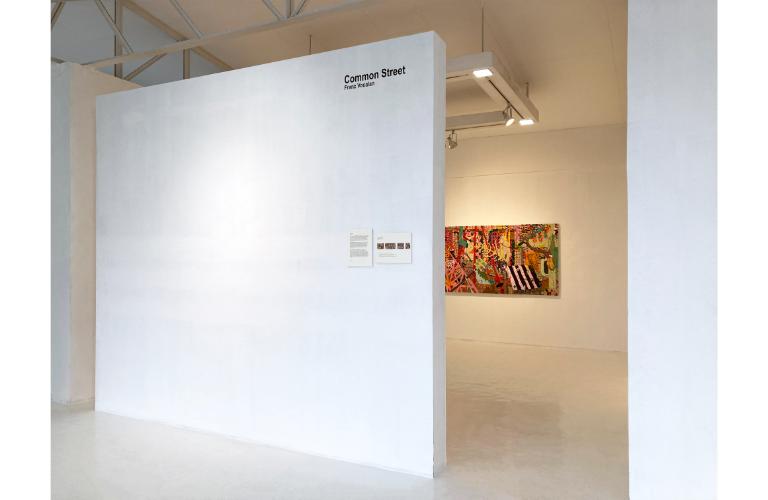
Common Street
Nano Vocalan
The street has served as an artistic subject since antiquity. This is evident in surviving works such as the procession in the Pitsa panels of Corinthia, Zhang Zeduang’s ink paintings of bustling urban scenes, and the simple road depicted in the Flotilla fresco from Akrotiri. These works, presumably, provide a glimpse into the human psyche of the past, particularly that of the relationship between individuality and shared spaces. Although the street was rarely a primary subject for art at that time, one thing is for certain: artists of the past, whether consciously or not, considered the street to be a crucial mechanism ingrained in the fabric of daily life.
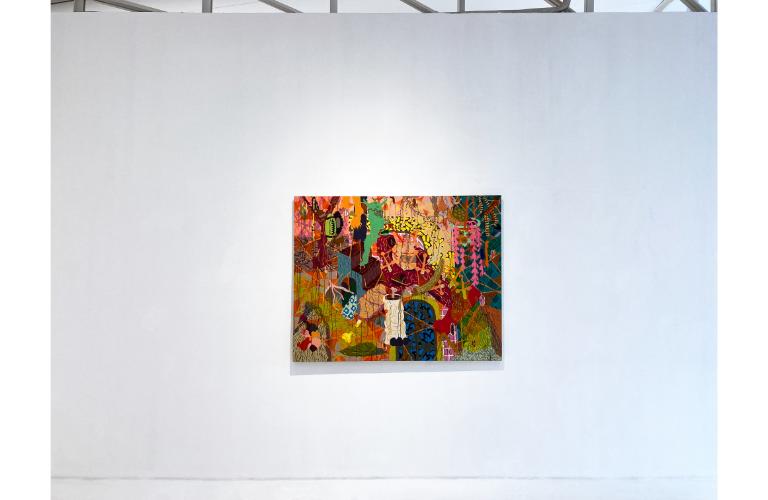
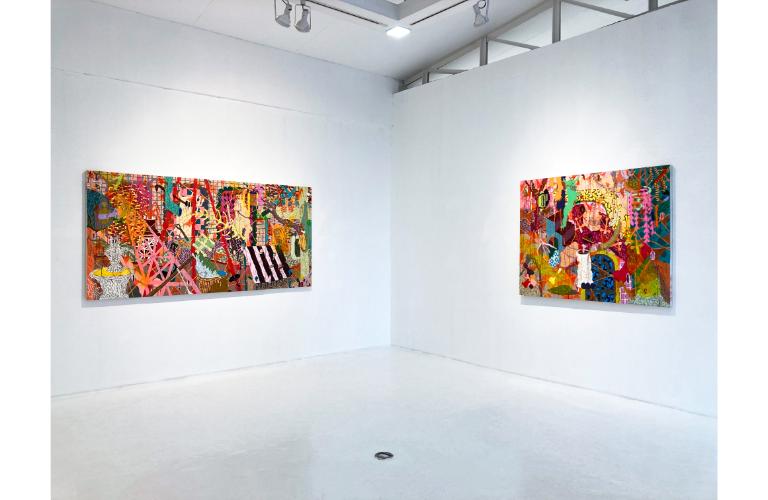
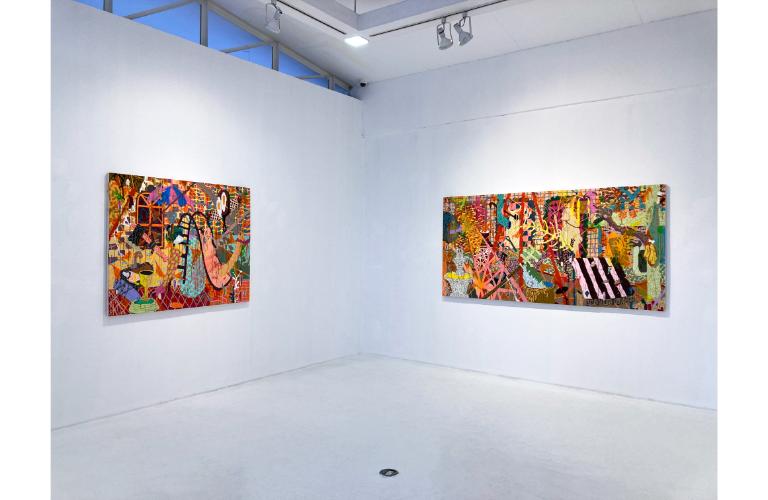
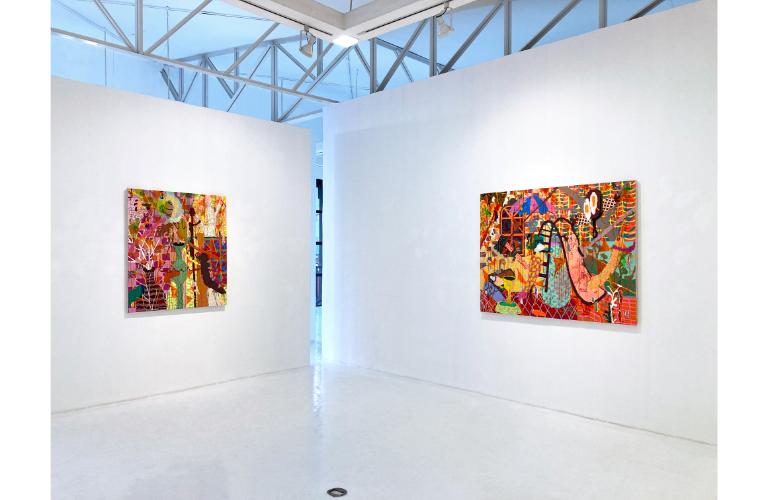
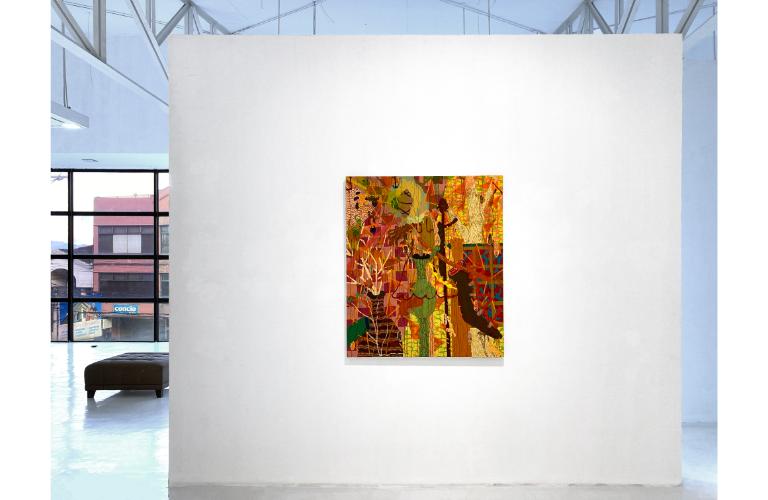
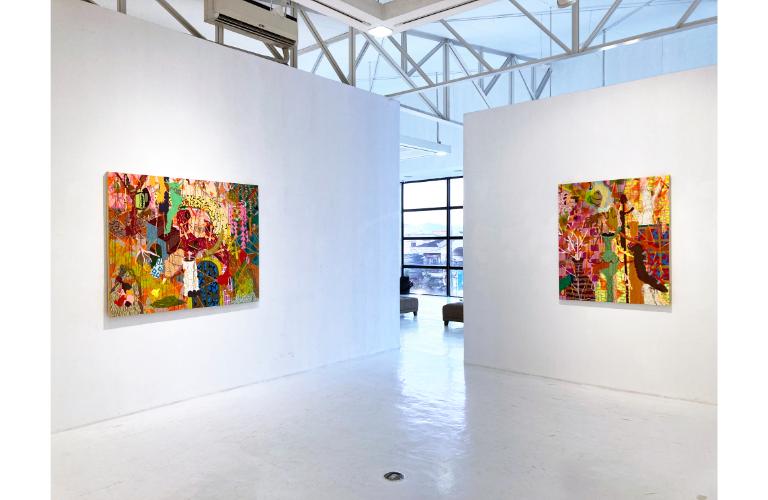
Nano’s Common Street extends beyond mere topography, but also investigates the diverse cultures which emerged and thrived (and endured) within its confines. The exhibit dissects these familiarities and lived experiences, and ultimately interprets them through the act of painting. One defi ning trait of Nano’s painting is that the overall narrative is charged with ambiguity, hence allowing the viewer greater freedom of discernment. Further, the paintings deliberately destabilizes interpretation, hovering between pure abstraction and figuration, testing our judgment as onlookers, posing a conundrum: how does one “properly” comprehends the message behind such imagery–and if there is such a thing as “proper” comprehension at all.
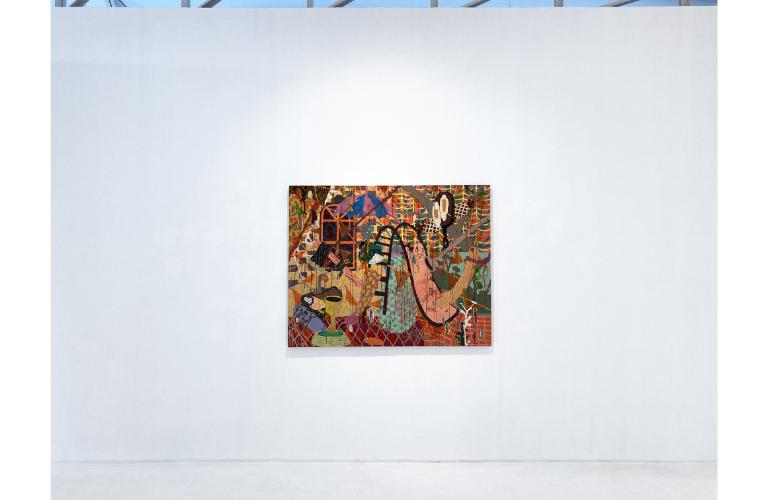
This is exemplified in Mga Tanod na Walang Tulog, where unfathomable figures weave together, creating an atmosphere of congestion–a sensation recognized by many metro-dwellers. There are traces of order, such as the use of multiple vanishing points, the application of contours to determine the positive space from the negative, and the illusion of depth, only to be undermined by fragmentation resulting from the deliberate use of lines and competing patterns, disrupting the order that once existed. The painting becomes an allegory to the intrinsic nature of the common street itself: it is not a static terrain, but an organic space which bears a diverse ecology–perpetually subject to change and reinterpretation by those who gaze upon it, or traverse it. And despite the deep-rooted association that streets have with being routinary and mundane, Common Street attempts to challenge this passive relationship, proposing that meaning is not inherent but forged through attentive observation, and active participation.
//
Mimi Salibio
Works

Mga Tanod na Walang Tulog
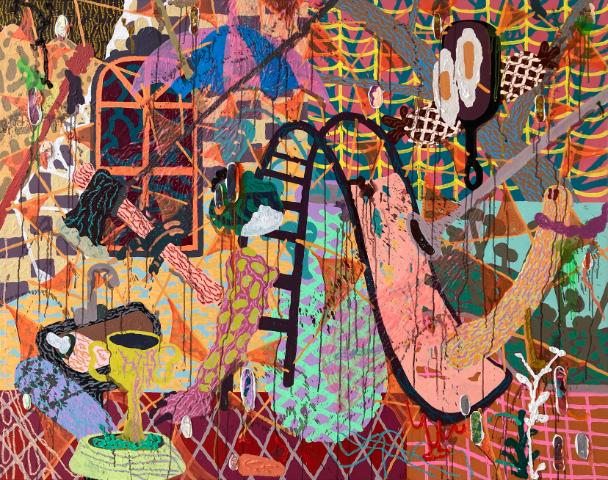
Bahay ng Paga
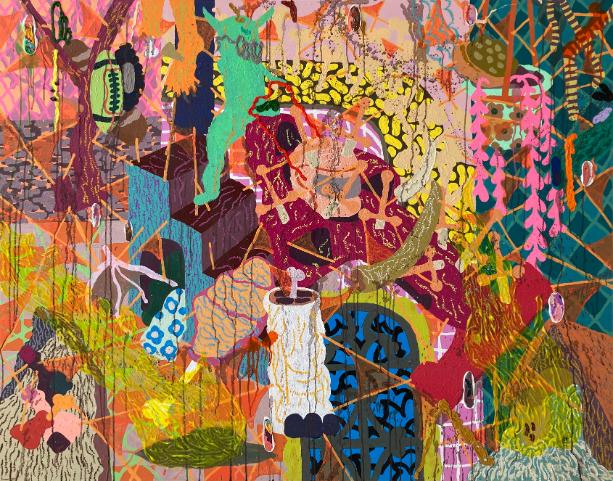
Hangya
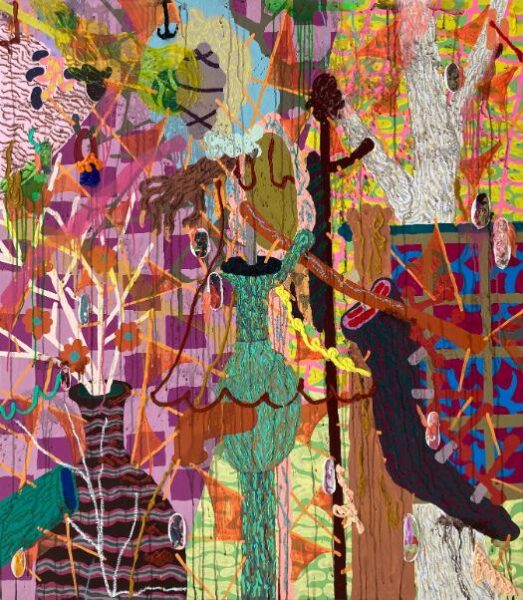
Lagayan ng mga Hinahanap
Documentation