Just a Bit of Rain
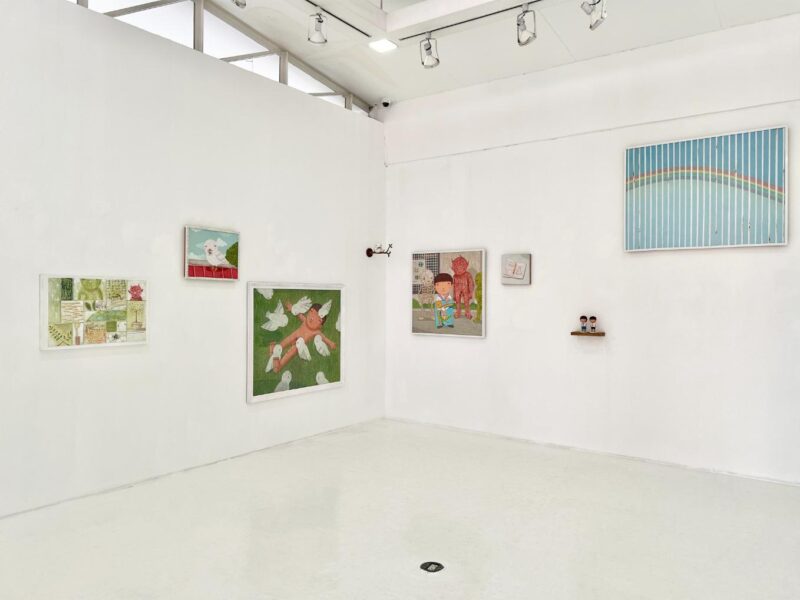
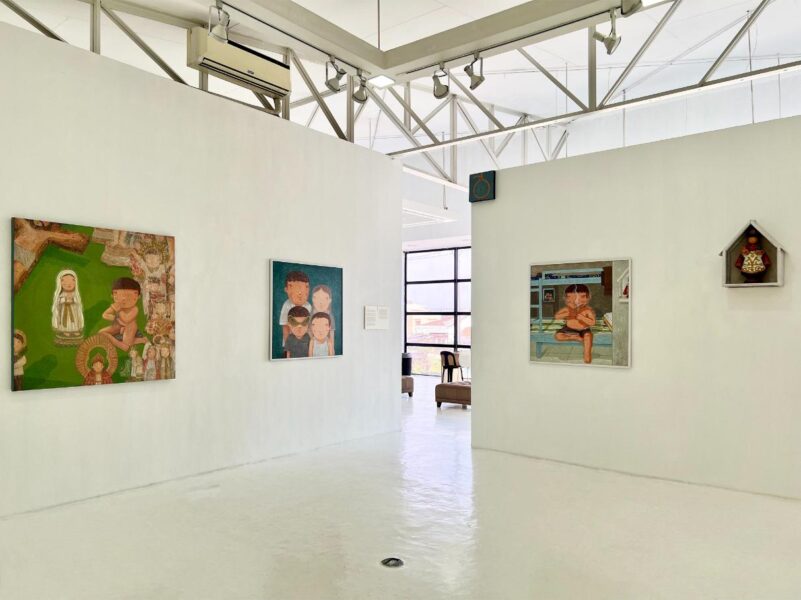
How does one begin to know what art is? The answers would be as different as we could imagine. Just a Bit of Rain is Alburoto’s exhibition where he permits such an interrogation — one that examines art’s intersection with personal history. Paintings and their accompanying sculptures are fashioned from the artist’s engagement with memory, specifically from the time period of adolescence up to now, in a final attitude of acceptance of the cards that he has been dealt.
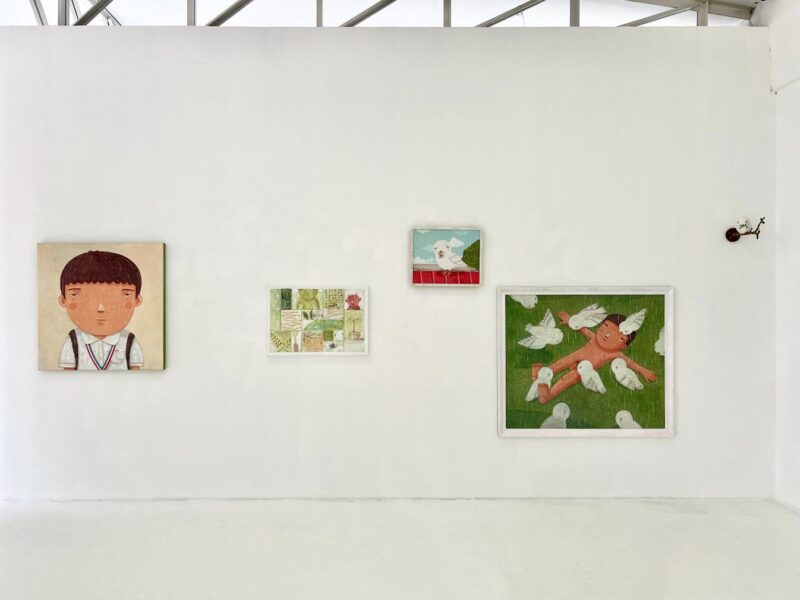
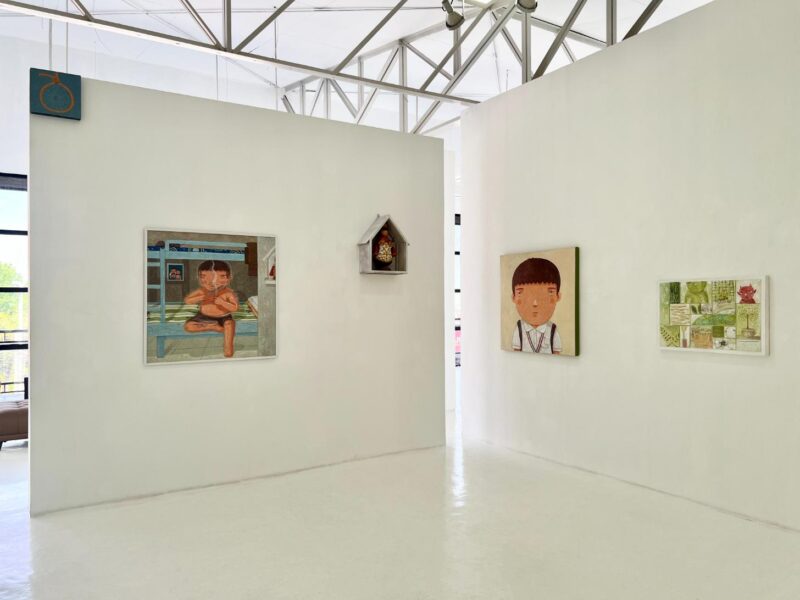
A start anywhere comes rife with expectations. “Top Notch” is a portrait of a child, but also of our own expectations of a student. Does the subject come across as a peer, or an object of guardianship? The boy stares forward in a vacant manner Alburoto usually employs, where we cannot know what the subject is thinking. In his pocket is a matchbox that harkens back to days of spider fighting, sometimes to the death, which is still popular among young rural Filipino students — a sport that has been banned in some areas due to the distracting effects of its popularity. The boxed spider also makes an appearance in another painting, “Gagambang Bahay”, weaving a new home.
“Sa likod ng notebook” is where Alburoto pinpoints the start of his hand at drawing, a relatable truth for most kids who need an outlet from prolonged listening and looking to the front. His artistic confidence was built through what was deemed extracurricular. He reflects on how winning a poster-making competition as a schoolboy not only opened him up to thinking about art as a career, but how its criteria must have influenced his early beliefs on how an artwork is produced: The range of colors in order to be described as ‘delightful’ and ‘positive’, the images to be used to convey virtues and vices, and the straightforward handwritten answers for a questionnaire that accompanies the submitted work. “Poster Child” presents a self-awareness of these conventions in the painting itself, with the exception of the third. Yet these conventions of poster-making, no matter how limiting after a certain threshold of experience and education, have allowed Alburoto to control what may be seen, felt, and obscured inside and beyond the works he creates. The proclivity for humor, too, that at times results in absurd yet familiar pictures, color the viewer’s imagination.
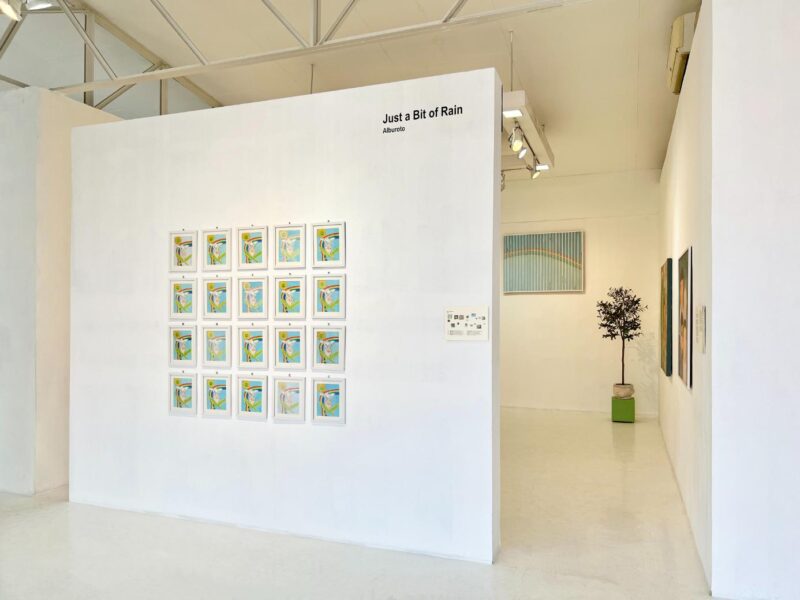
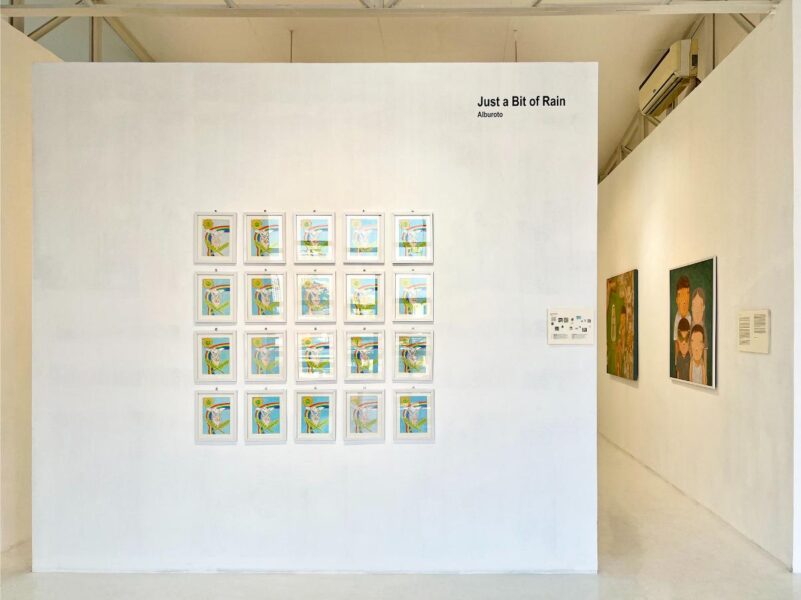
In “Vision of Peace”, the artist creates twenty oil pastel reproductions of his winning entry. A sun, rainbow, hand in a V sign, and white dove with an olive branch make up the image. The repetition of this overwhelmingly positive picture creates an unsettling feeling, much like Andy Warhol’s use of screenprinting to create desensitizing images. Alburoto scatters these symbols of peace around in several sculptures and paintings, seemingly in search of it, such as in “Distortion”, a mixed media work comprising several arranged and painted wooden panels, where in looking back, memory has been occluded by the stretch of time from the past to present.
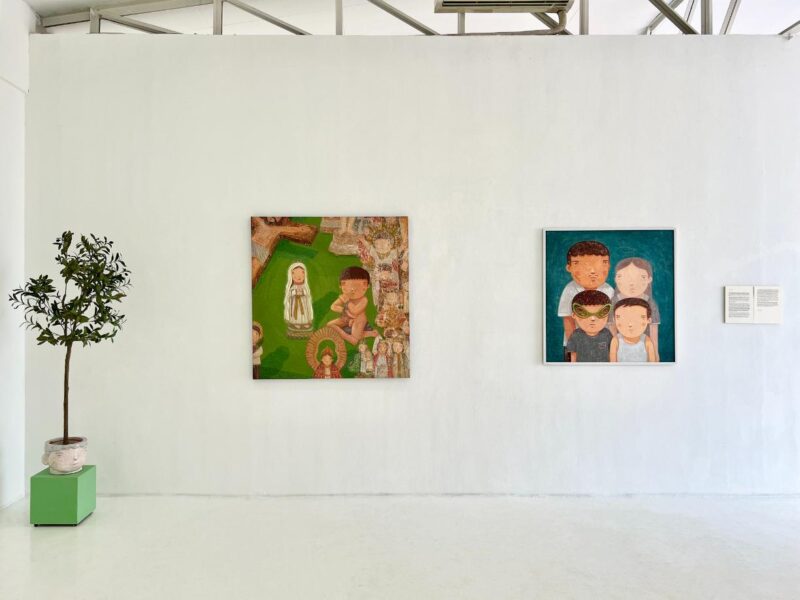
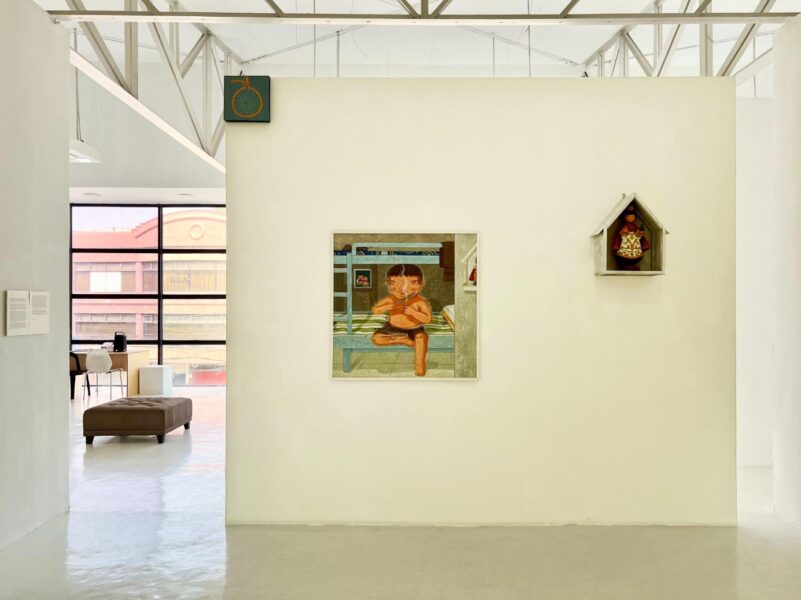
In works like “Batcher”, Alburoto cheekily reconfigures the symbolism of the dove where the search for peace may lead us to different places. His sculpture of the same name is of a dove with an olive branch in its beak, attached to the wall by a tree branch base. The quotidian thread continues in more paintings with domestic scenes. Religious imagery also bleeds into this quest with “Messiah Complex” and “Smoke Gets in Your Eyes”, both irreverent works that contrast biblical figures with fallible, common man. “Messiah Complex” is a haunting depiction of a memory that floats above the rest. A man in handcuffs kneels beside the Virgin Mary, other figures of saints and a crucifix, probably invoking them, and getting his hand out in an almost miraculous manner. It brings to mind surreal scenes from Mike de Leon’s spiritual horror Itim (1976), where life-size holy figures loom and congregate around protagonists. Meanwhile, the subject of “Smoke Gets in Your Eyes” grapples with addiction while a rat, a framed family picture, and a fraction of a Sto. Niño looks on powerlessly throughout the room. The sculpture “Santonino” completes the peripheral holy child atop the altar, watching in silence. The picture behind the man in the latter work reappears in “Family Portrait”, another textured painting based on an old photograph, that features a family of four, with the mother rendered in a more faded manner. It is here that the collection morphs from a broad, utopian concept, to searching for peace in the everyday despite its many spectres.
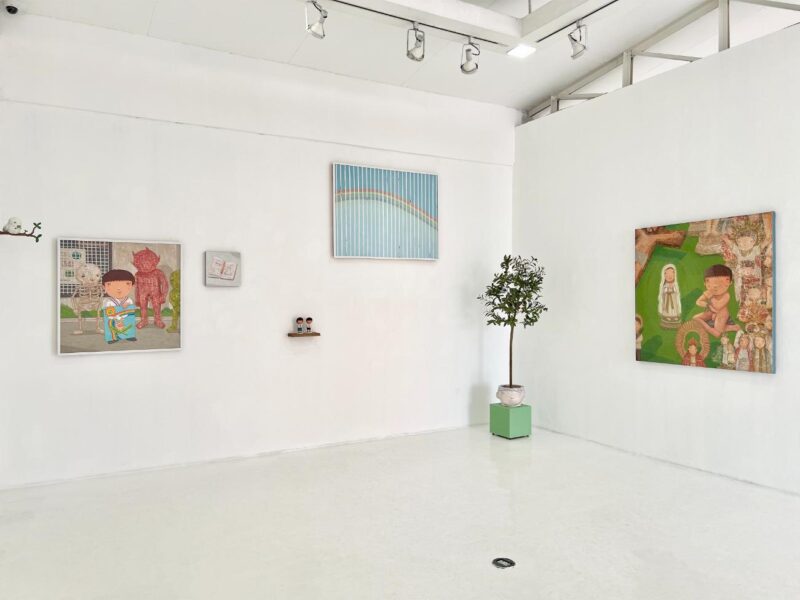
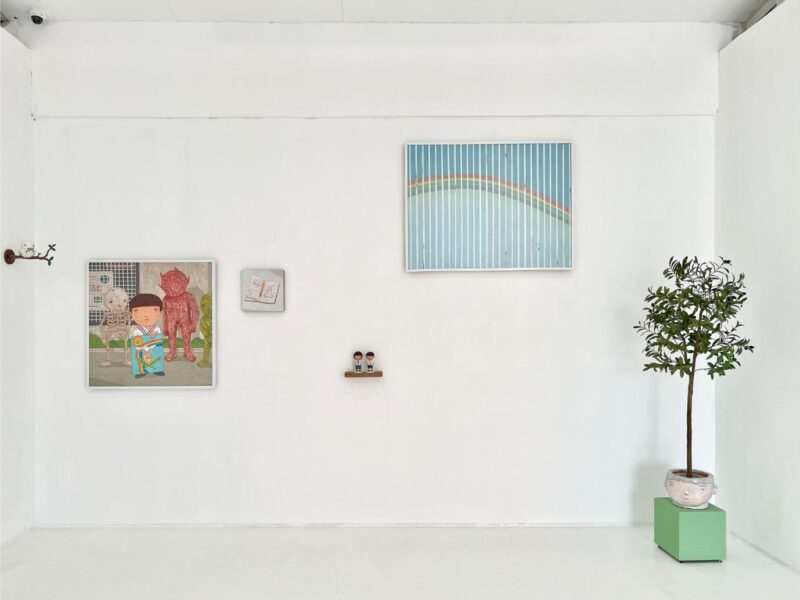
The titular piece, “Just a bit of rain”, is Alburoto’s acknowledgement of the spectrum of life with its peaks and valleys. The good mixes with the bad, but both are temporary. In “Olive Tree”, a tree grows from the rainbow soil in a head-shaped pot. Finally, “Resting Peace” shows a naked figure, lying down in the rain with a bevy of doves. The bare and vulnerable connection of the man to the rain, grass, and doves in the work evokes a groundedness where hard times finally wash away, defining the artist’s reflection on then and now. To answer how he arrived at what art is, perhaps art had appeared as a steadying force early on.
Text by Sarah Conanan
Works
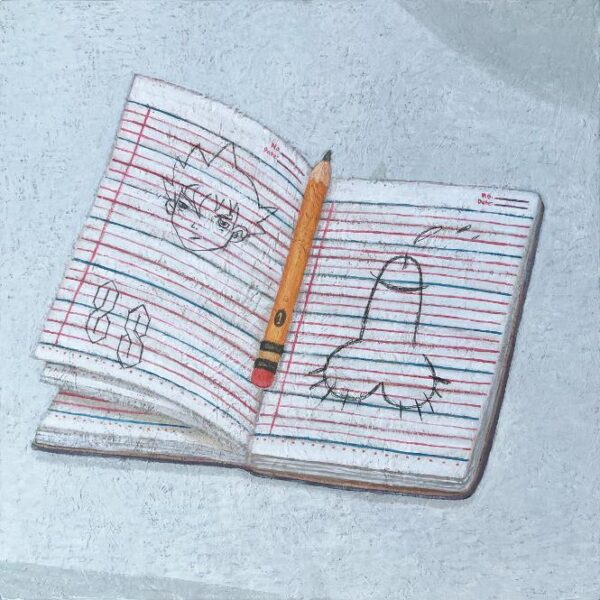
Sa Likod Ng Notebook
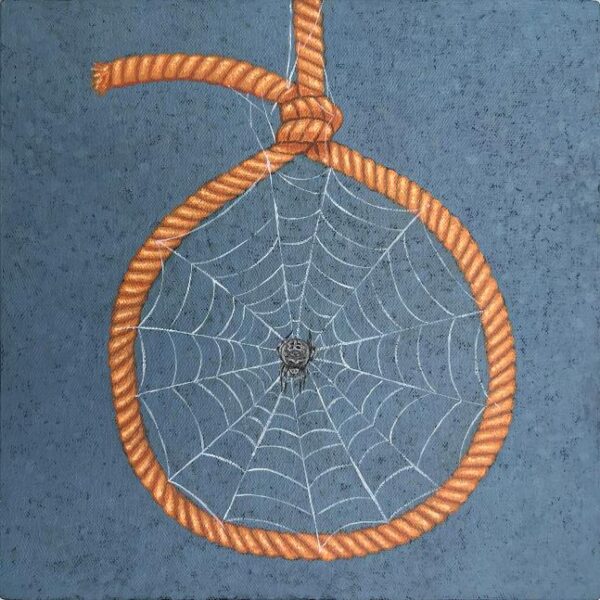
Gagambang Bahay
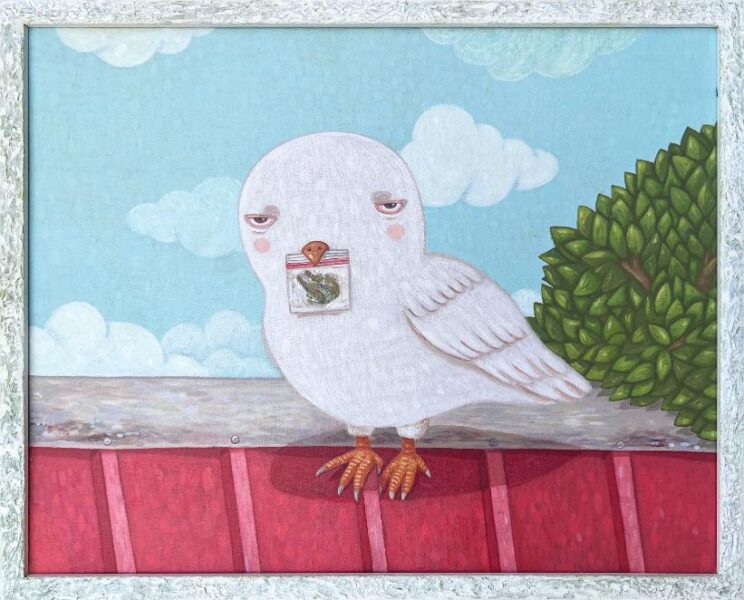
Batcher
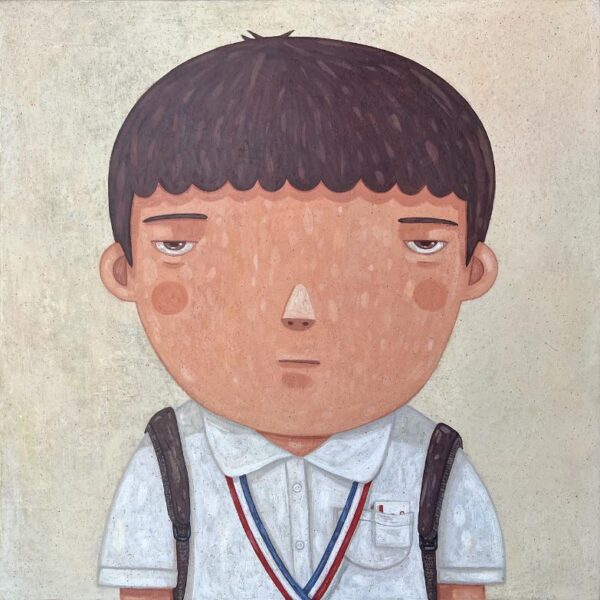
Top Notch
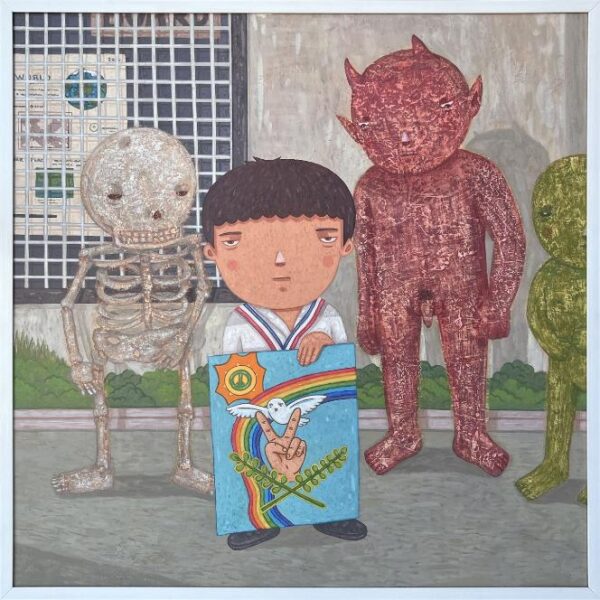
Poster Child
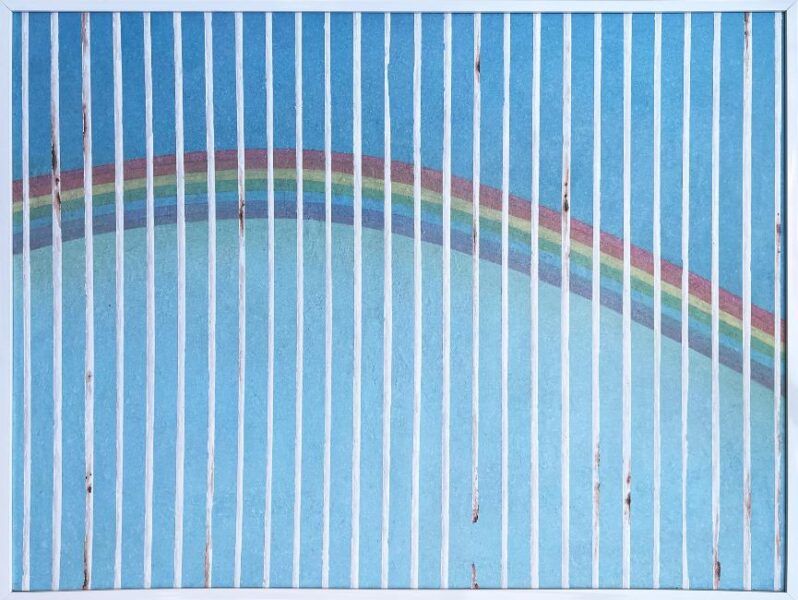
Just A Bit Of Rain
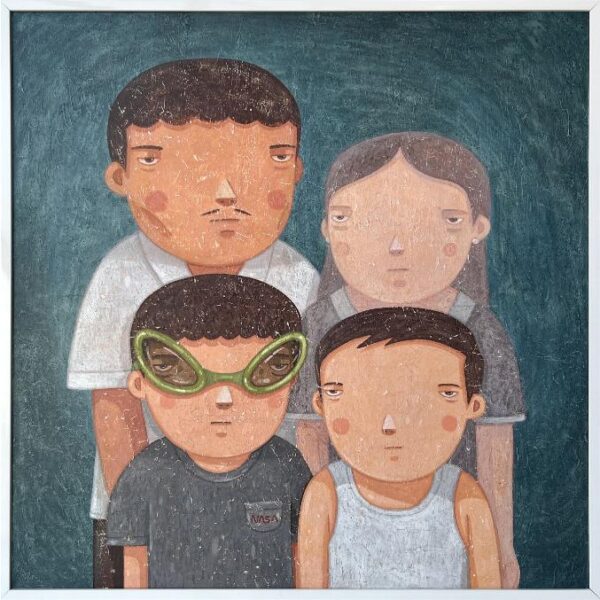
Family Portrait
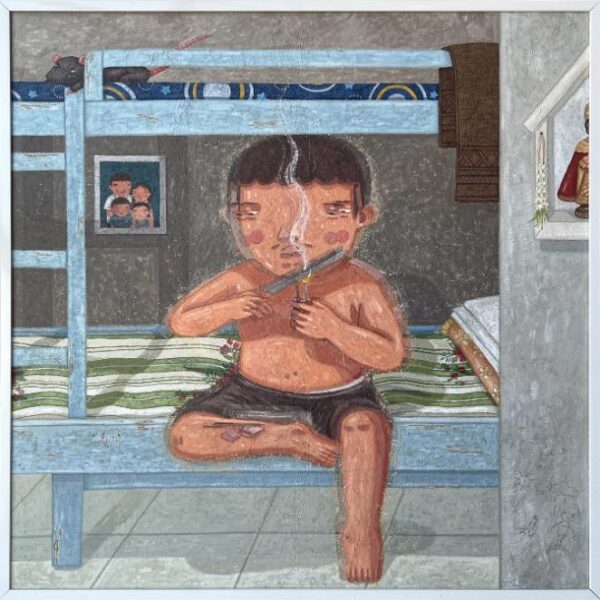
Smoke Gets In Your Eyes
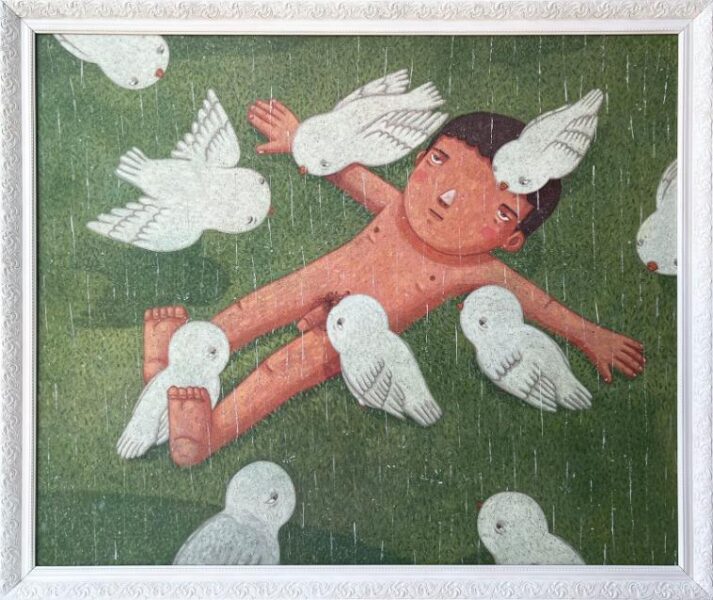
Resting Peace
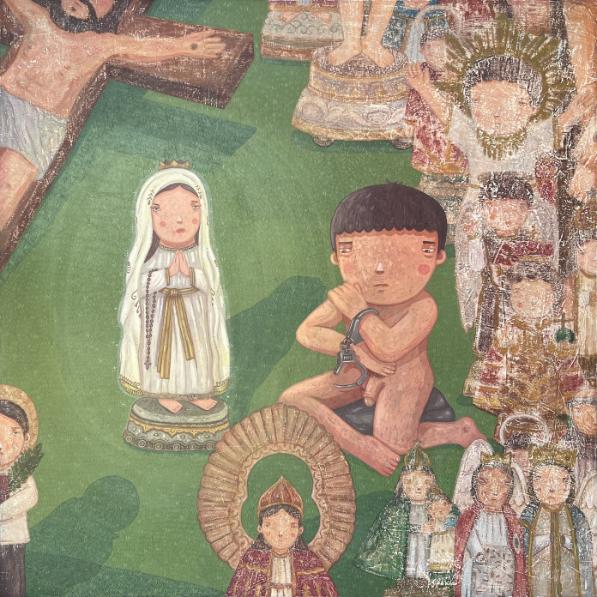
Messiah Complex
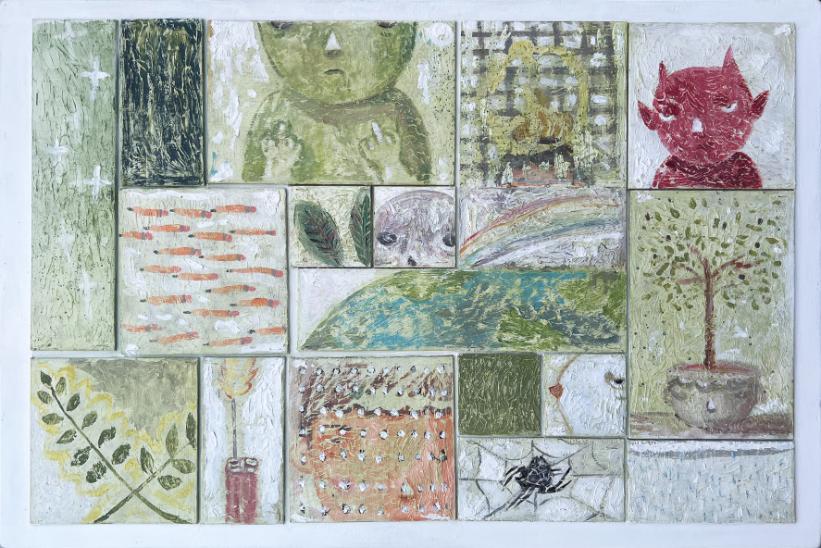
Distortion
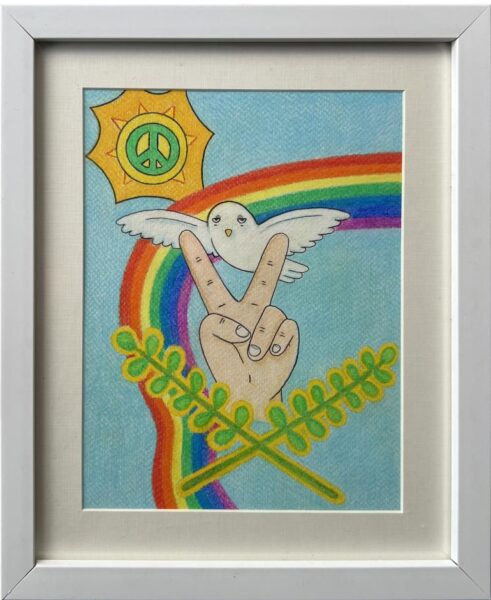
Vision Of Peace
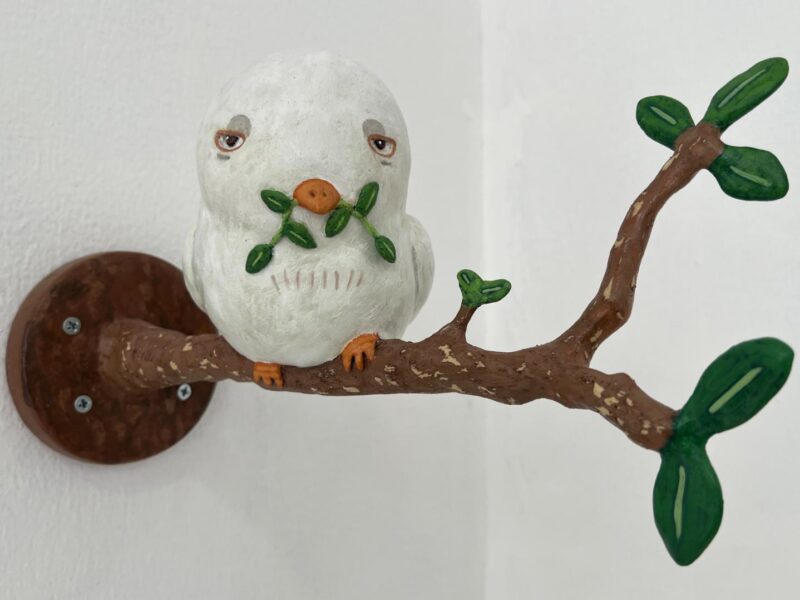
Dove
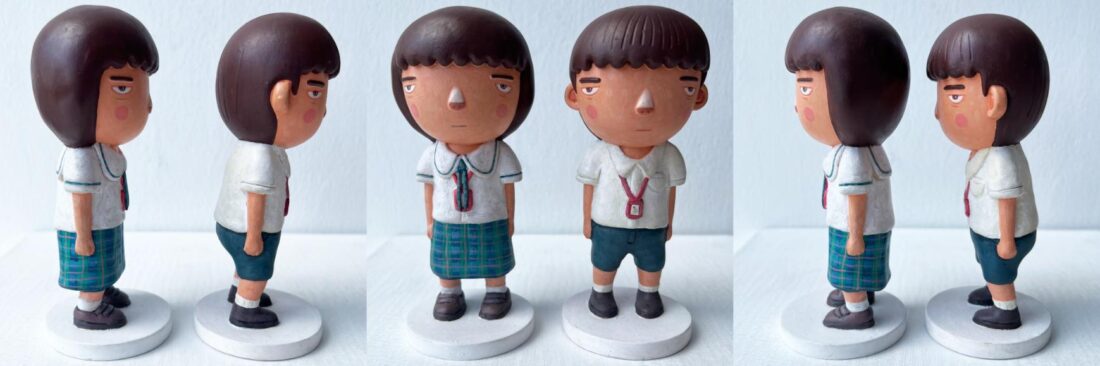
B.E.S.
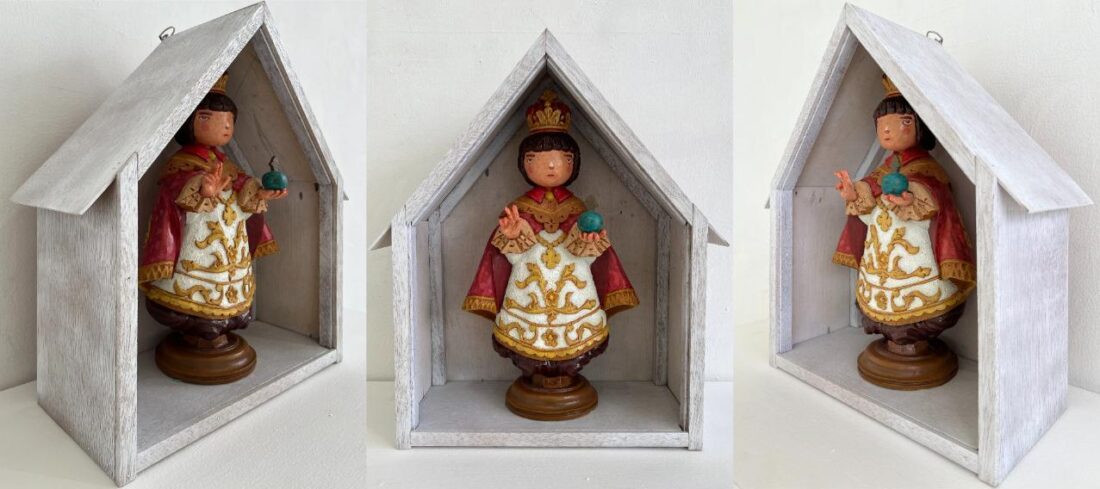
Sto. Nino
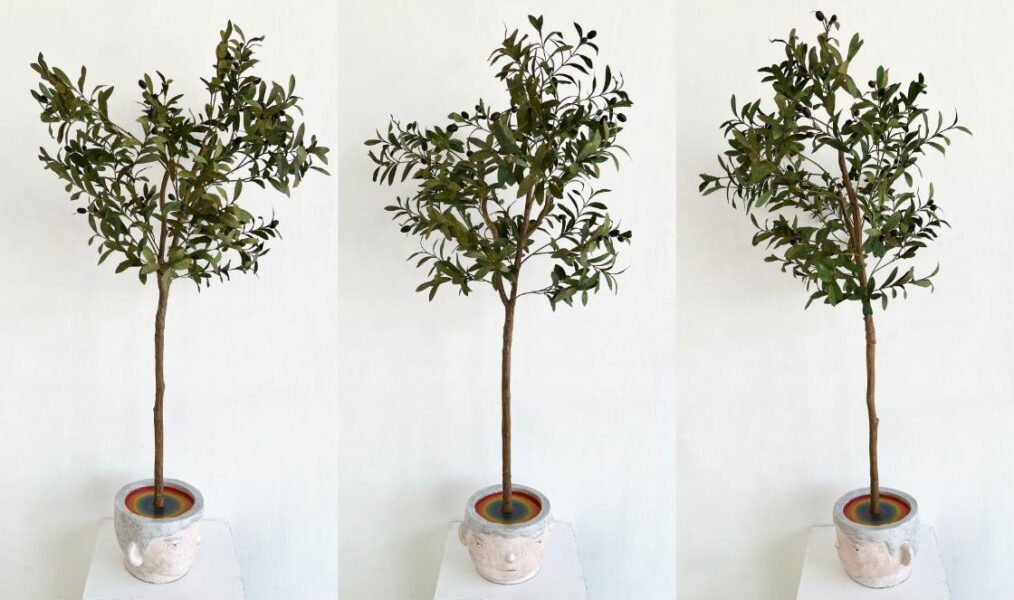
Olive Tree
Documentation